If you’re an engineer planning to work with German companies, study in Germany, or collaborate on international technical projects, learning German engineering vocabulary can give you a major advantage.
Germany remains one of the world’s most influential engineering economies, home to global leaders in automotive manufacturing, robotics, renewable energy, and industrial automation. More than 43% of Germany’s international students study engineering.
The good news is that much of German engineering vocabulary follows logical patterns. German technical language often combines smaller words into precise compound terms that describe exactly what something does. Once you understand these building blocks, even intimidating words can become surprisingly easy to decode.
In this guide, you’ll learn essential German engineering terms and phrases used in mechanical, electrical, civil, and software engineering.
Core German Engineering Vocabulary
These foundational terms appear frequently in technical documents, academic programs, and engineering workplaces.
| German | English |
| der Ingenieurdie Ingenieurin | Engineer (male)Engineer (female) |
| die Ingenieurwissenschaft | engineering |
| die Technologie | technology |
| die Technik | technique |
| die Industrie | industry |
| die Forschung | research |
| die Entwicklung | development |
| Forschung und Entwicklung (F&E) | research and development |
| das Projekt | project |
| die Innovation | innovation |
| das System | system |
| der Prozess | process |
| die Methode | method |
| das Modell | model |
| die Analyse | analysis |
| die Lösung | solution |
| die Anwendung | application |
| die Konstruktion | design/construction |
| die Planung | planning |
| die Produktion | production |
These terms form the backbone of your technical German vocabulary and appear across many engineering disciplines.
Mechanical Engineering Vocabulary (Maschinenbau)
Germany’s reputation for mechanical engineering excellence goes back more than a century. In 1885, German engineer Karl Benz designed the world’s first practical automobile powered by an internal combustion engine, the Benz Patent-Motorwagen. He received a patent for the vehicle in 1886, widely considered a milestone marking the birth of the modern automobile industry.
| German | English |
| der Maschinenbau | mechanical engineering |
| die Maschine | machine |
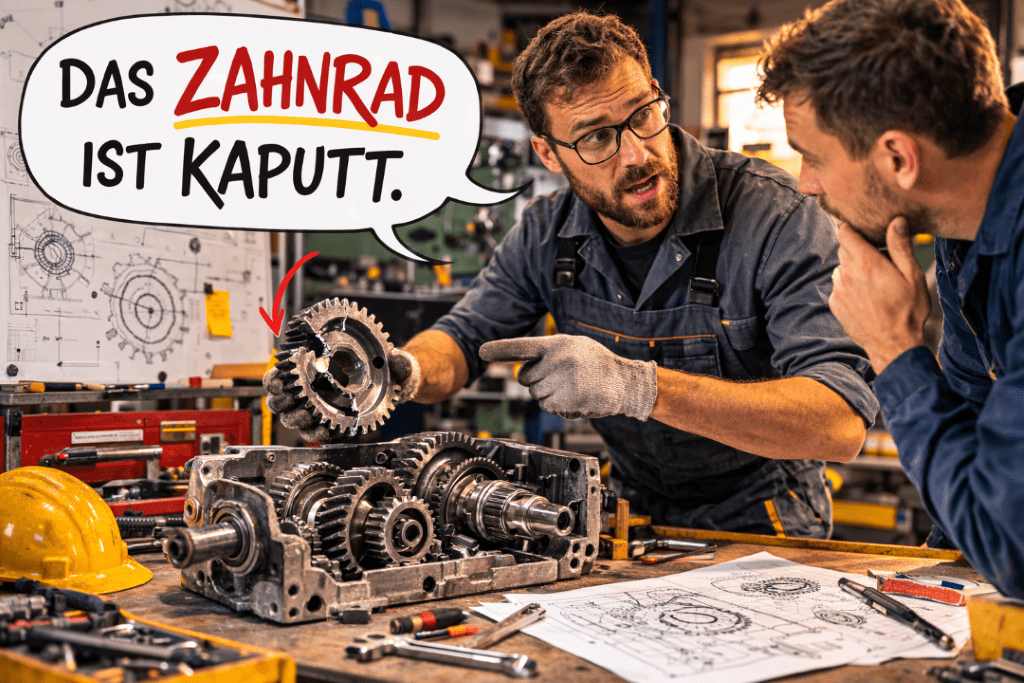
| das Zahnrad | gear |
| das Lager | bearing |
| der Motor | engine |
| der Kolben | piston |
| die Welle | shaft |
| der Antrieb | drive system |
| das Drehmoment | torque |
| die Reibung | friction |
| die Belastung | load |
| die Effizienz | efficiency |
| der Wirkungsgrad | efficiency ratio |
| die Kühlung | cooling |
| die Schmierung | lubrication |
| der Werkstoff | material |
| die Fertigung | manufacturing |
| das Bauteil | component |
| das Werkzeug | tool |
| die Montage | assembly |
Many mechanical engineering terms appear frequently in German compound words such as Maschinenbauingenieur (mechanical engineer).
Maschinenbauingenieur
Maschine – machine
Bau – construction
Ingenieur – engineer
Together, the words simply mean mechanical engineer.
Electrical Engineering Vocabulary (Elektrotechnik)
In 1866, German engineer Werner von Siemens invented the self-excited dynamo. This electric principle made large-scale electrical power generation practical and helped accelerate the global electrification of cities, factories, and transportation systems. Today, Siemens AG remains one of the largest electrical engineering companies in the world.
| German | English |
| die Elektrotechnik | electrical engineering |
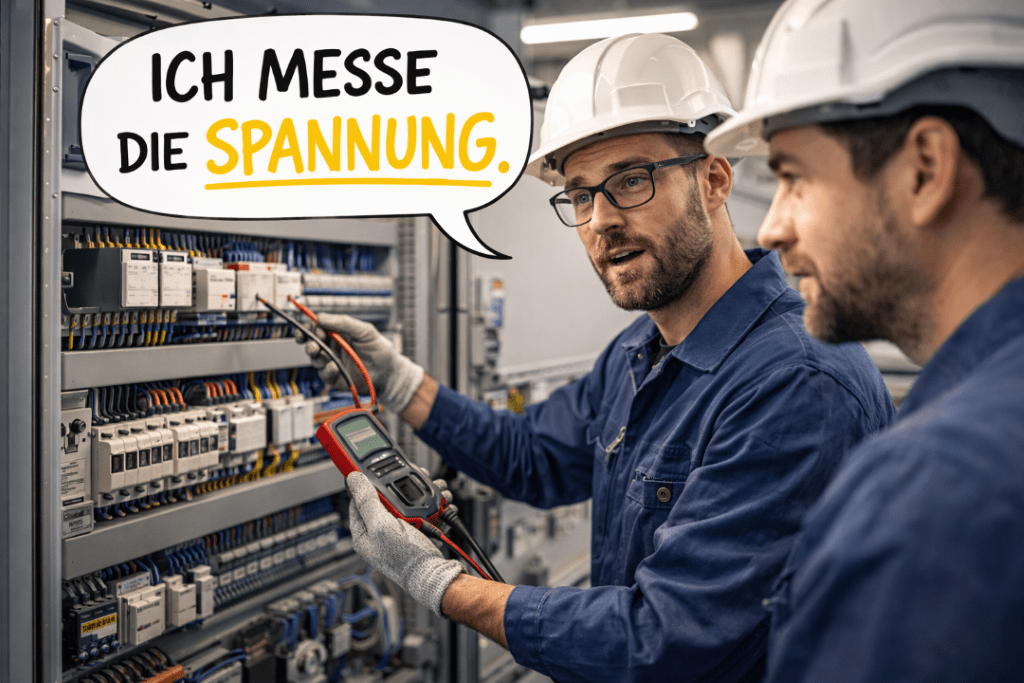
| die Spannung | voltage |
| der Strom | electric current |
| der Stromkreis | circuit |
| der Widerstand | resistance |
| der Leiter | conductor |
| der Isolator | insulator |
| der Transformator | transformer |
| die Batterie | battery |
| die Energie | energy |
| der Generator | generator |
| die Leistung | power |
| die Frequenz | frequency |
| der Sensor | sensor |
| der Schalter | switch |
| die Verbindung | connection |
| das Kabel | cable |
| die Steuerung | control system |
| die Automatisierung | automation |
| das Signal | signal |
Electrical engineering vocabulary also overlaps heavily with industrial automation and robotics, which are major sectors in German manufacturing.
Civil Engineering Vocabulary (Bauingenieurwesen)
One German civil engineering accomplishment is the straightening of the Upper Rhine under Johann Gottfried Tulla. It was the largest and most difficult hydraulic engineering project in Germany of its time. The Rhine rectification project ran from 1817 to 1876 and was intended to control flooding and recover agricultural land.
| German | English |
| das Bauingenieurwesen | civil engineering |
| die Baustelle | construction site |
| der Beton | concrete |
| das Fundament | foundation |
| die Brücke | bridge |
| das Gebäude | building |
| die Struktur | structure |
| der Tunnel | tunnel |
| die Straße | road |
| der Stahl | steel |
| der Zement | cement |
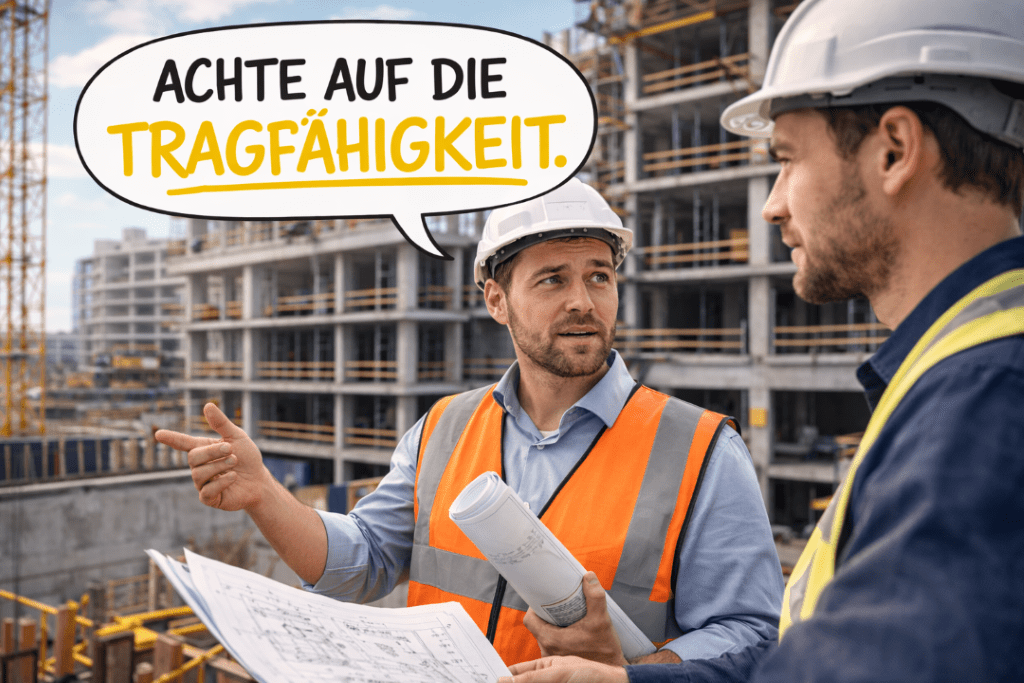
| die Tragfähigkeit | load capacity |
| die Planung | planning |
| die Vermessung | surveying |
| der Bauplan | blueprint |
| die Konstruktion | construction |
| die Infrastruktur | infrastructure |
| die Stabilität | stability |
| die Belastung | structural load |
| die Wartung | maintenance |
Many German construction terms combine multiple words into long compounds such as Bauingenieurwesen (civil engineering).
Software and Technology Engineering Vocabulary
Germany played a major role in the development of modern business software through the founding of SAP in 1972. Five former IBM engineers created a system designed to process business data in real time rather than through overnight batch processing. Their first product evolved into SAP R/1, the early foundation of what would later become enterprise resource planning (ERP) software.
| German | English |
| die Softwareentwicklung | software development |
| der Algorithmus | algorithm |
| das Netzwerk | network |
| die Datenbank | database |
| die Programmierung | programming |
| der Code | code |
| die Schnittstelle | interface |
| die Plattform | platform |
| das Systemdesign | system design |
| die IT-Sicherheit | cybersecurity |
| der Server | server |
| die Cloud | cloud computing |
| die Simulation | simulation |
| die Digitalisierung | digitalization |
| das Datenmodell | data model |
| die Analyse | analytics |
| das System | system |
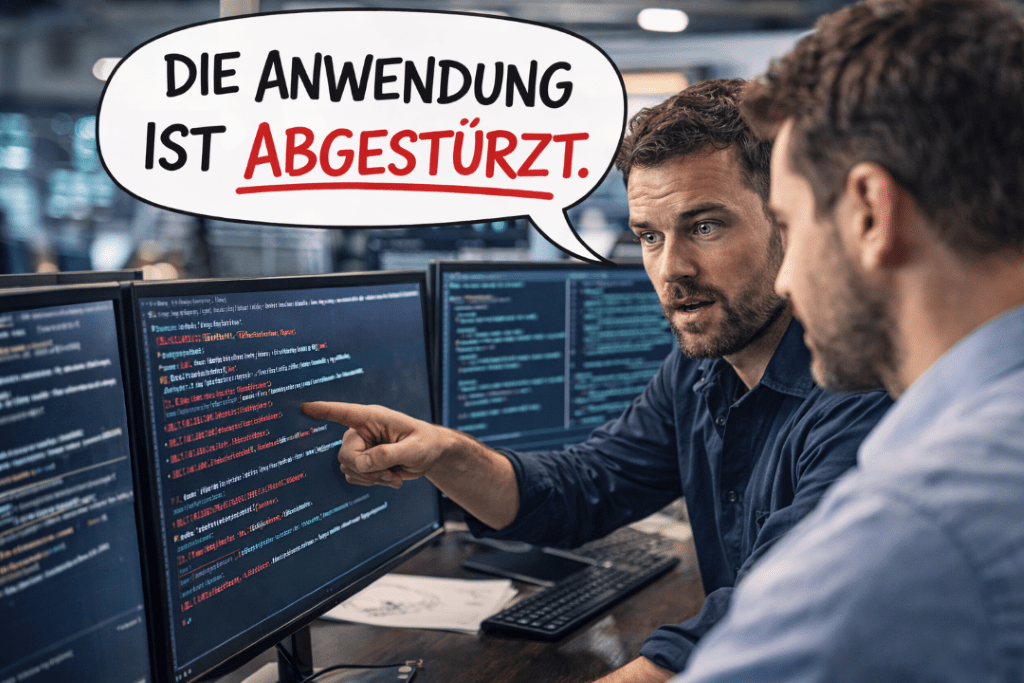
| die Anwendung | application |
| der Entwickler | developer |
| die Architektur | architecture |
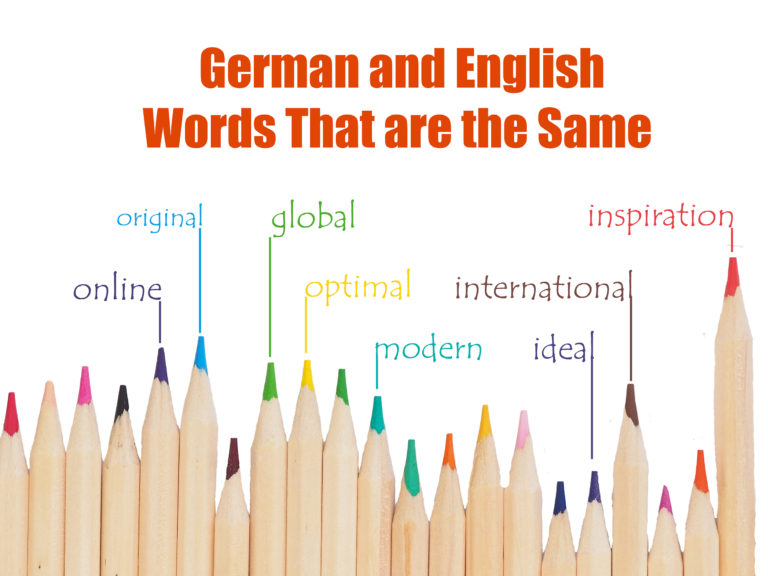
Many of these words look familiar because German technical vocabulary shares roots with international scientific terminology.
German Engineering Workplace Phrases
Beyond individual words, engineers often need to understand German phrases used in technical discussions and meetings.
Common phrases:
Bitte prüfen Sie die Spezifikationen.
Please review the specifications.
Wir müssen die Konstruktion überarbeiten.
We need to revise the design.
Die Anlage ist noch in der Testphase.
The system is still in the testing phase.
Das Projekt wird nächste Woche abgeschlossen.
The project will be completed next week.
Die Ergebnisse müssen analysiert werden.
The results need to be analyzed.
Die Messwerte stimmen nicht überein.
The measurements do not match.
Wir müssen die Ursache des Problems finden.
We need to find the cause of the problem.
Das Bauteil muss ersetzt werden.
The component needs to be replaced.
Die Berechnung ist noch nicht abgeschlossen.
The calculation is not finished yet.
Die Parameter müssen angepasst werden.
The parameters need to be adjusted.
Next Steps
German engineering vocabulary reflects the country’s long tradition of technical innovation and industrial development. Many of the terms used today originated in fields such as mechanical engineering, manufacturing, and materials science.
While German technical language can initially appear complex, much of it follows clear patterns. Once you learn the building blocks of common engineering words, it becomes much easier to recognize and understand unfamiliar terms.
By expanding your German engineering vocabulary, you’ll be better prepared to read technical documents, understand industry discussions, and engage with the broader world of German engineering and technology.
What’s next? Learn German pronunciation so you can start speaking German.