If you’re learning German, one of the fastest ways to expand your German vocabulary is by mastering the most common German adjectives.
Adjectives are the words that help you describe people, objects, emotions, and situations. Instead of simply saying “the car,” adjectives allow you to say “the fast car,” “the new car,” or “the expensive car.”
Because adjectives appear constantly in everyday conversation, learning the most frequently used ones will dramatically improve your ability to understand and speak German.
In this guide, you’ll learn 100 of the most common German adjectives, along with their English meanings and example sentences.
What Are German Adjectives?
German adjectives describe qualities, characteristics, and conditions.
They can describe:
- people
- objects
- emotions
- size
- color
- personality traits
- opinions
Examples:
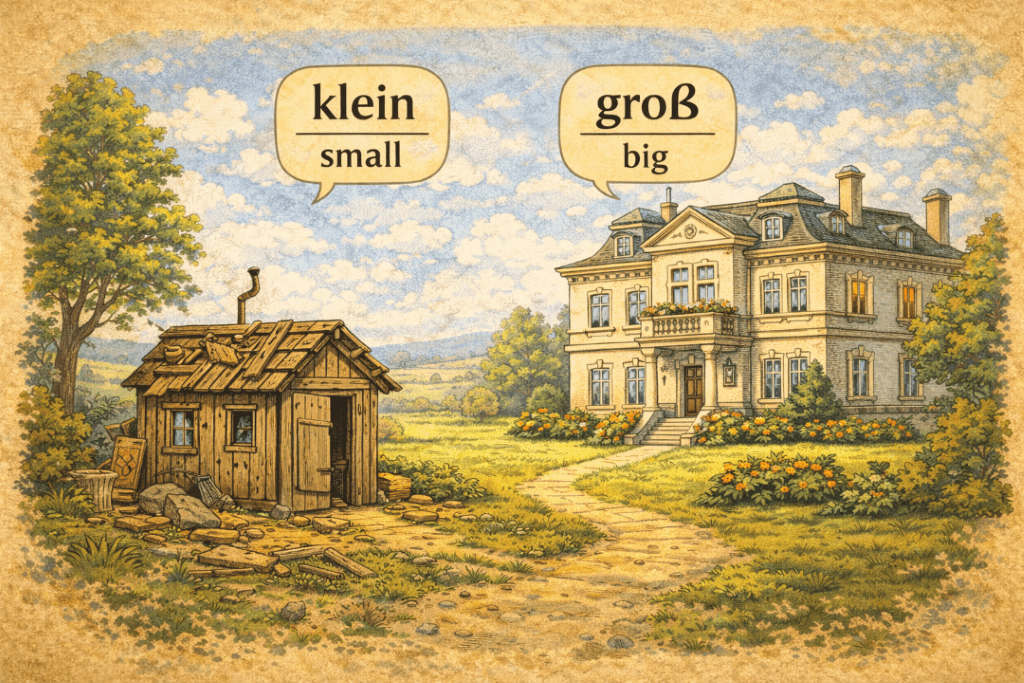
groß – big
klein – small
gut – good
schlecht – bad
Adjectives usually appear before nouns.
Example:
Das Auto ist schnell.
The car is fast.
25 Most Common German Adjectives
These adjectives appear constantly in everyday German conversation.
| German | English |
| gut | good |
| schlecht | bad |
| groß | big / tall |
| klein | small |
| alt | old |
| neu | new |
| jung | young |
| lang | long |
| kurz | short |
| schnell | fast |
| langsam | slow |
| teuer | expensive |
| billig | cheap |
| leicht | easy / light |
| schwer | difficult/heavy |
| schön | beautiful |
| hässlich | ugly |
| stark | strong |
| schwach | weak |
| warm | warm |
| kalt | cold |
| freundlich | friendly |
| nett | nice |
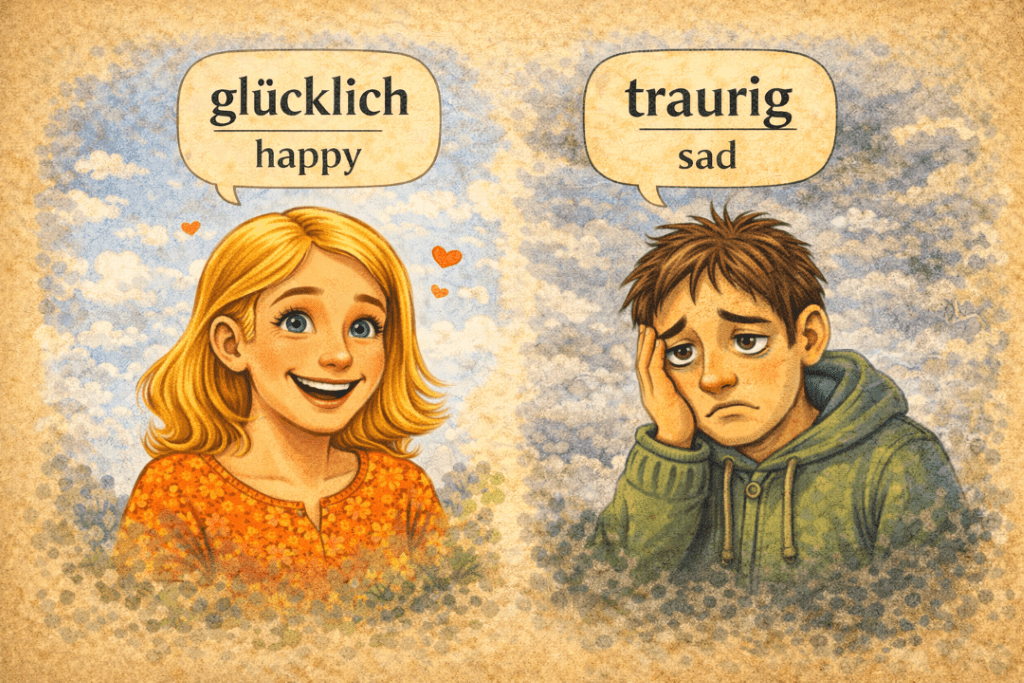
| glücklich | happy |
| traurig | sad |
German Adjectives for Describing People
These adjectives are commonly used to describe personality and appearance.
| German | English |
| intelligent | intelligent |
| lustig | funny |
| ruhig | calm |
| laut | loud |
| ehrlich | honest |
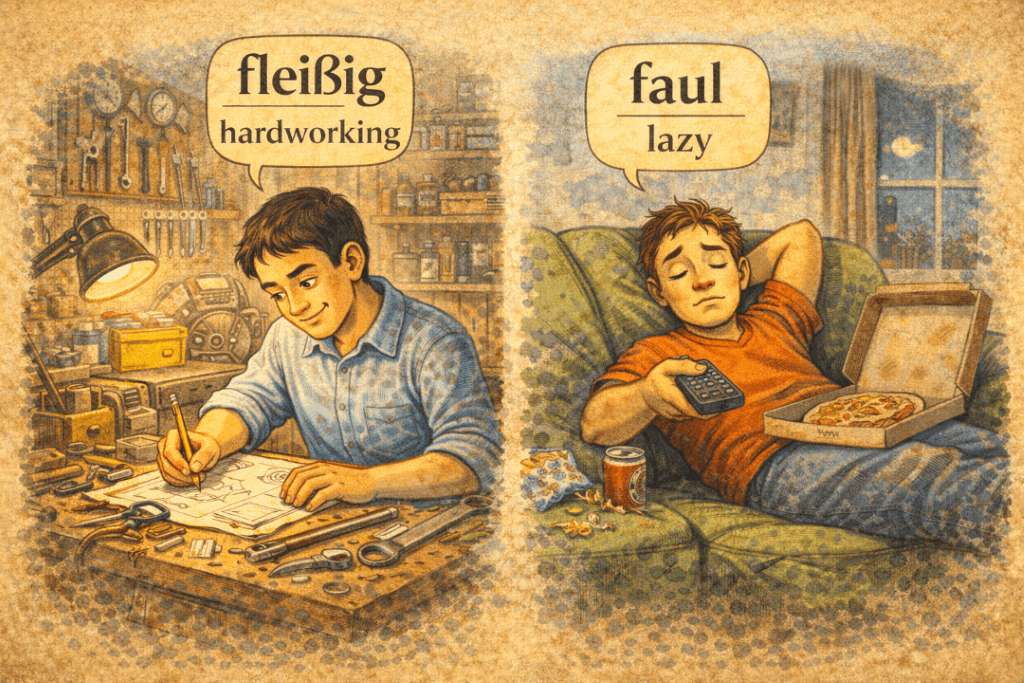
| fleißig | hardworking |
| faul | lazy |
| mutig | brave |
| geduldig | patient |
| nervös | nervous |
Example:
Er ist sehr freundlich.
He is very friendly.
German Adjectives for Describing Objects
| German | English |
| modern | modern |
| praktisch | practical |
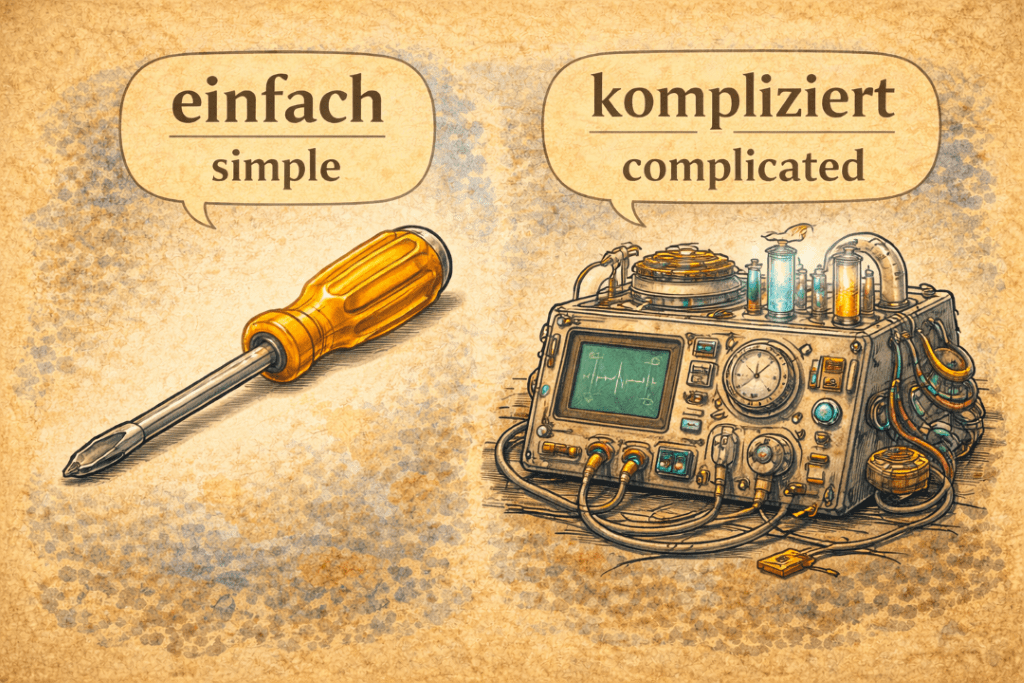
| einfach | simple |
| kompliziert | complicated |
| stabil | stable |
| zerbrechlich | fragile |
| wertvoll | valuable |
| nützlich | useful |
Example:
Das Werkzeug ist sehr stabil.
The tool is very sturdy.
German Adjectives for Emotions
| German | English |
| zufrieden | satisfied |
| begeistert | excited |
| überrascht | surprised |
| müde | tired |
| gestresst | stressed |
| verwirrt | confused |
Example:
Ich bin heute sehr müde.
I am very tired today.
German Adjectives for Size and Quantity
| German | English |
| riesig | huge |
| winzig | tiny |
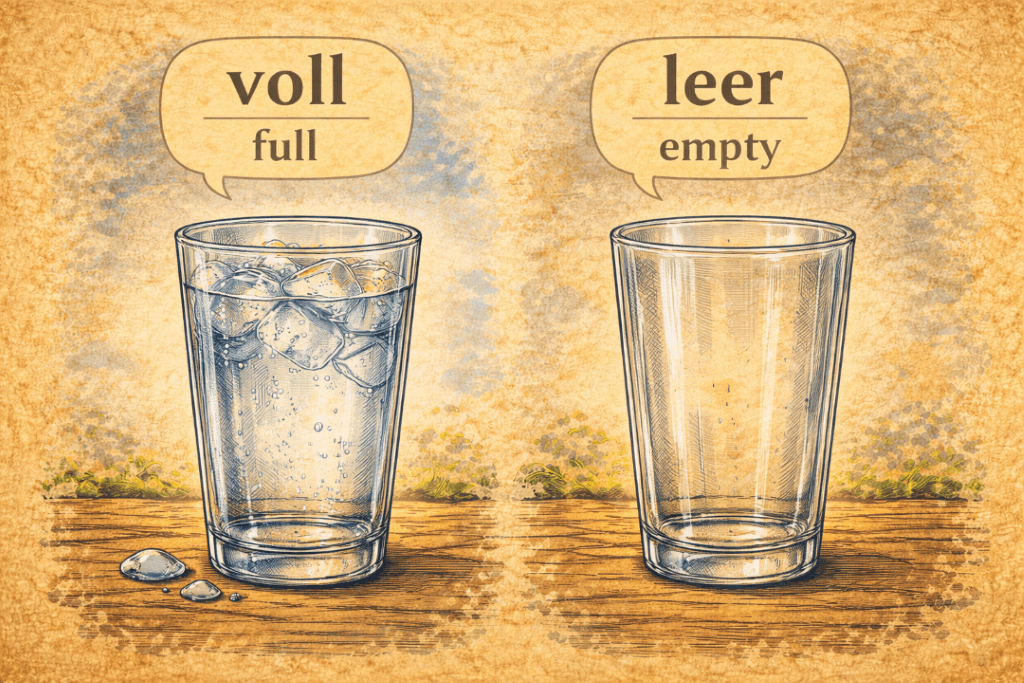
| voll | full |
| leer | empty |
| viel | much / many |
| wenig | little / few |
Example:
Die Stadt ist riesig.
The city is huge.
How German Adjectives Work in Sentences
German adjectives change depending on gender, case, and article, a system known as adjective endings.
Things get slightly different when adjectives appear before a noun.
In German, adjectives usually take an ending that depends on:
- gender (masculine, feminine, neuter)
- case (nominative, accusative, etc.)
- the article (der, die, das, ein)
Example:
der große Hund
the big dog
die große Stadt
the big city
das große Haus
the big house
Although this may look complicated at first, focus on learning the adjective itself before worrying about endings.
Good News for Beginners
The good news is that beginners don’t need to memorize every adjective ending right away. The most important first step is simply learning the base form of the adjective, such as:
- groß — big
- klein — small
- glücklich — happy
- traurig — sad
- fleißig — hardworking
- faul — lazy
Once you become comfortable using these adjectives in sentences, you can gradually learn the adjective ending patterns later.
A Simple German Adjective Ending Chart (Beginner Version)
When adjectives appear before nouns, they usually add -e or -en endings.
Here is a simple beginner pattern using the adjective groß (big).
| Article | Example | Meaning |
| der | der große Hund | the big dog |
| die | die große Katze | the big cat |
| das | das große Haus | the big house |
| ein | ein großes Haus | a big house |
Here are a few examples using common German adjectives.
Der fleißige Student lernt Deutsch.
The hardworking student learns German.
Das kleine Haus ist alt.
The small house is old.
Die glückliche Frau lacht.
The happy woman laughs.
Tips for Learning German Adjectives Faster
If you want to memorize German adjectives more efficiently:
Learn adjectives in pairs
groß / klein
big / small
Use them in sentences
Das Haus ist groß.
The house is big.
Group them by topic
Emotions
Personality
Size
Opinions
This makes vocabulary easier to remember.
Final Thoughts
Learning the most common German adjectives is one of the fastest ways to improve your vocabulary.
With just a few dozen adjectives, you can already describe:
- people
- objects
- emotions
- situations
As your German improves, these descriptive words will help you create richer sentences and communicate more naturally.