German Body Parts: Beginner Vocabulary With Example Sentences
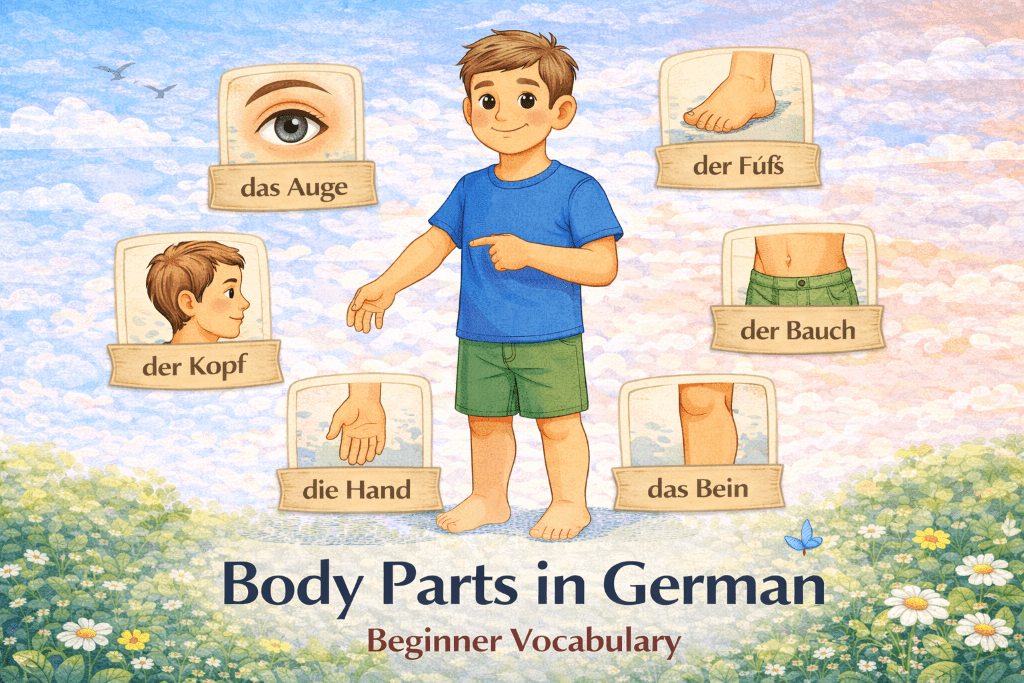
Learning body parts in German is one of the most practical things you can do as a beginner. These words come up in daily life more often than you might think. You use them when talking about pain, describing people, understanding simple instructions, and handling basic health situations. Even very early German lessons often include body vocabulary because it is so useful and easy to apply right away.
This guide covers the most important body parts in German for beginners. You’ll learn the core vocabulary, see how the words work in real sentences, and pick up a few simple patterns that make them easier to remember.
If you are still building your basic vocabulary, start with our German vocabulary for beginners guide for more essential everyday words.
The Word for Body in German
The German word for body is der Körper.
You may not use this word as often as individual body-part vocabulary, but it is still helpful to know.
Example sentence:
Der Körper braucht Schlaf.
The body needs sleep.
Most of the time, though, beginners are more likely to need words like head, hand, foot, back, or stomach in real conversation.
Basic Body Parts in German
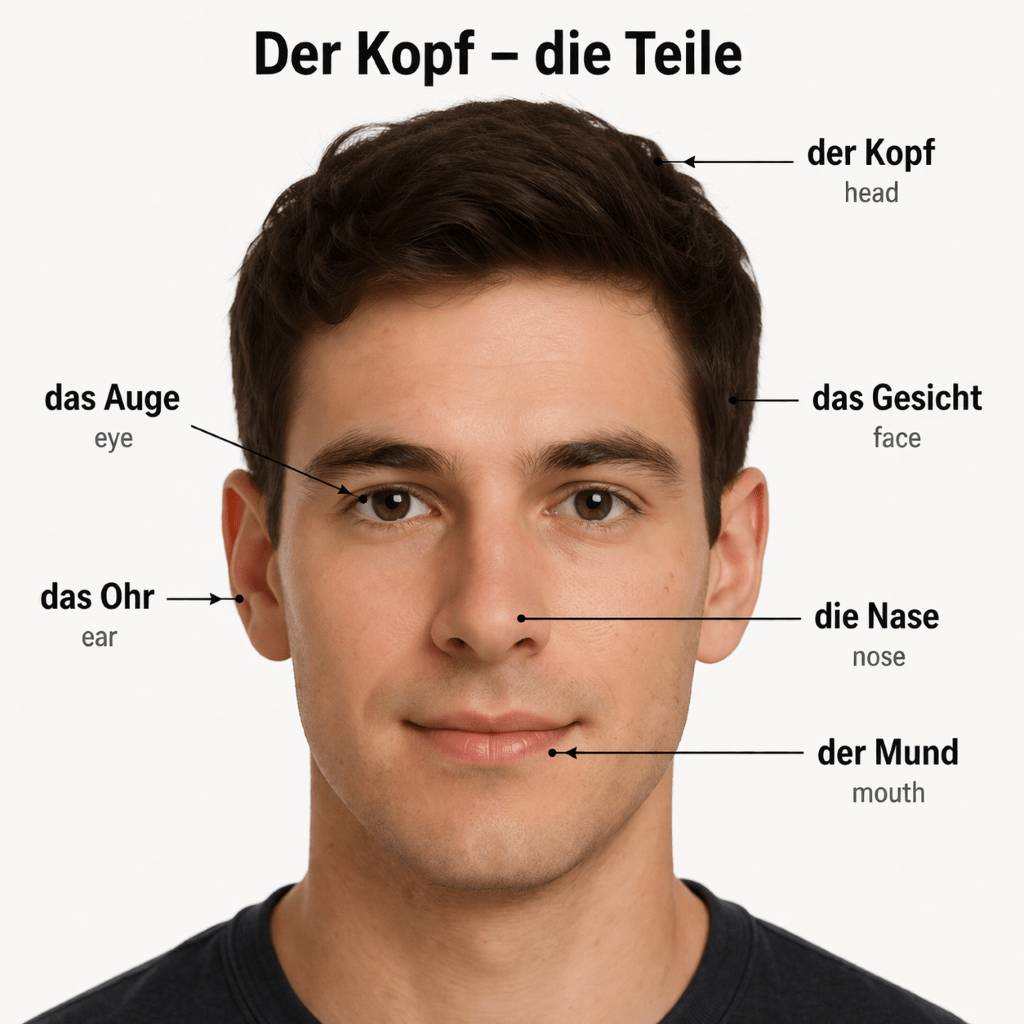
These are the most important body words every beginner should know first:
- der Kopf = head
- das Gesicht = face
- das Auge = eye
- die Augen = eyes
- die Nase = nose
- der Mund = mouth
- das Ohr = ear
- die Ohren = ears
These words are useful when describing people, talking about health, or understanding simple German instructions.
Example sentences:
Mein Kopf tut weh.
My head hurts.
Sie hat blaue Augen.
She has blue eyes.
Meine Nase ist kalt.
My nose is cold.
Das Kind hat große Ohren.
The child has big ears.
If you want to describe features like eye or hair color, the German colors post is a useful next step.
Upper Body Parts in German
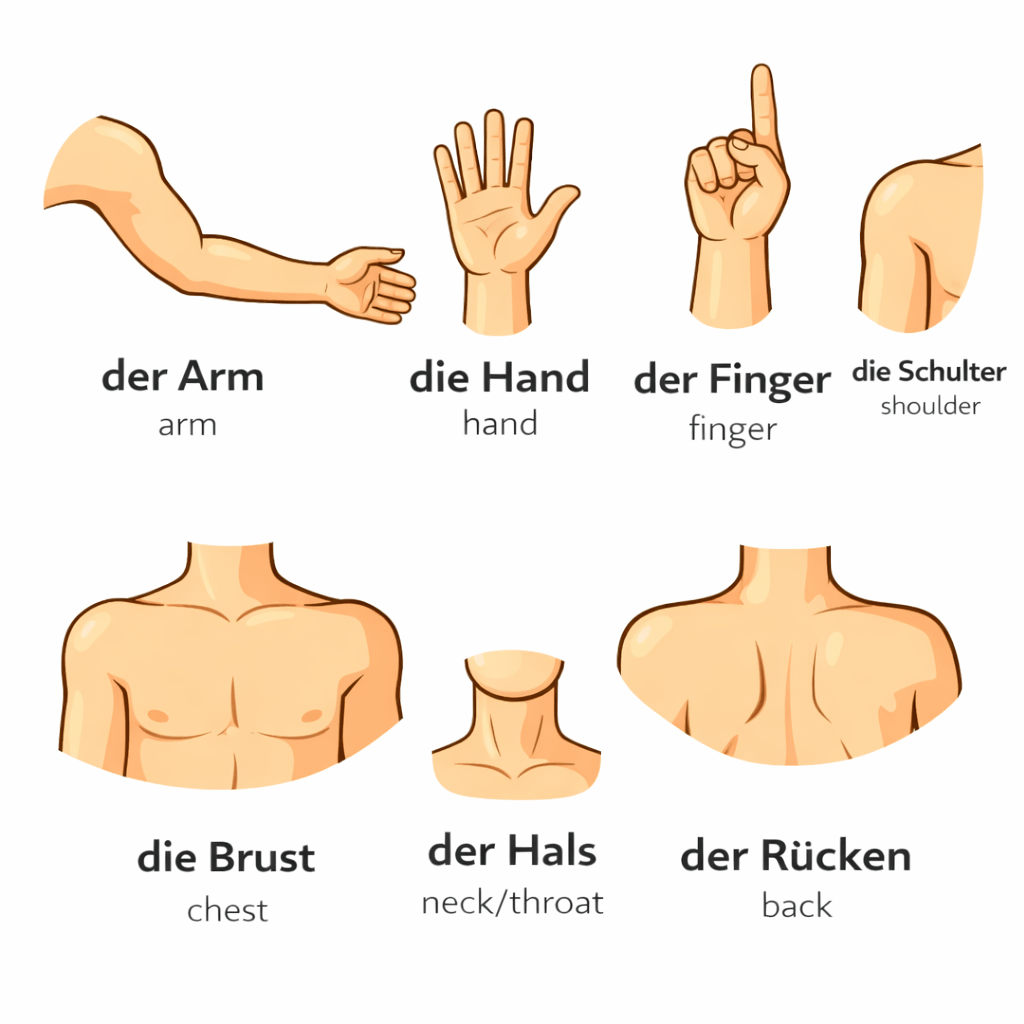
Once you know the basic face vocabulary, the next most useful group is the upper body.
- der Arm = arm
- die Hand = hand
- der Finger = finger
- die Schulter = shoulder
- die Brust = chest
- der Rücken = back
- der Hals = neck/throat
These are especially useful in everyday health situations.
Example sentences:
Mein Arm ist müde.
My arm is tired.
Ich wasche meine Hände.
I wash my hands.
Mein Rücken tut weh.
My back hurts.
Der Hals ist trocken.
My throat is dry.
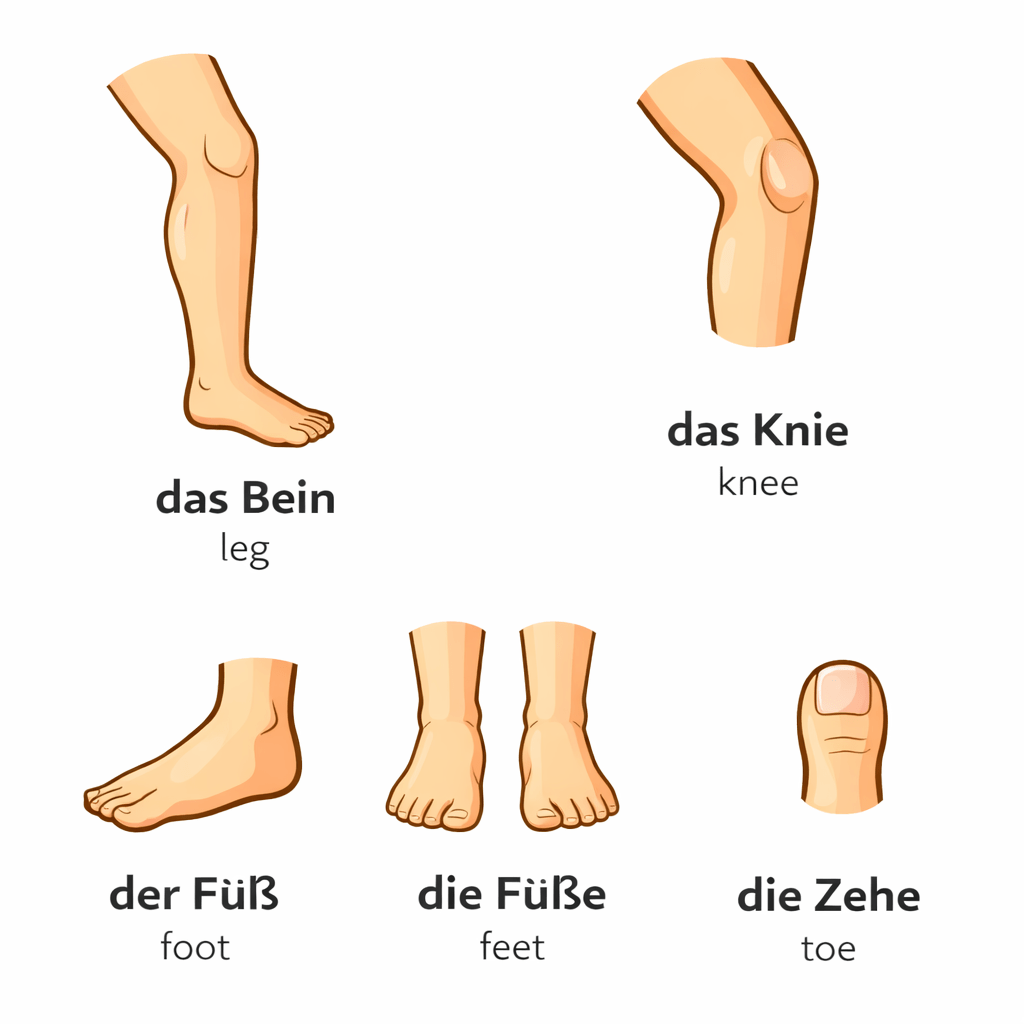
Lower Body Parts in German
These are the main lower-body words beginners should know:
- das Bein = leg
- das Knie = knee
- der Fuß = foot
- die Füße = feet
- die Zehe = toe
These words come up often when talking about walking, sports, pain, or everyday movement.
Example sentences:
Mein Bein ist stark.
My leg is strong.
Mein Knie tut weh.
My knee hurts.
Meine Füße sind kalt.
My feet are cold.
Ich habe Sand zwischen den Zehen.
I have sand between my toes.
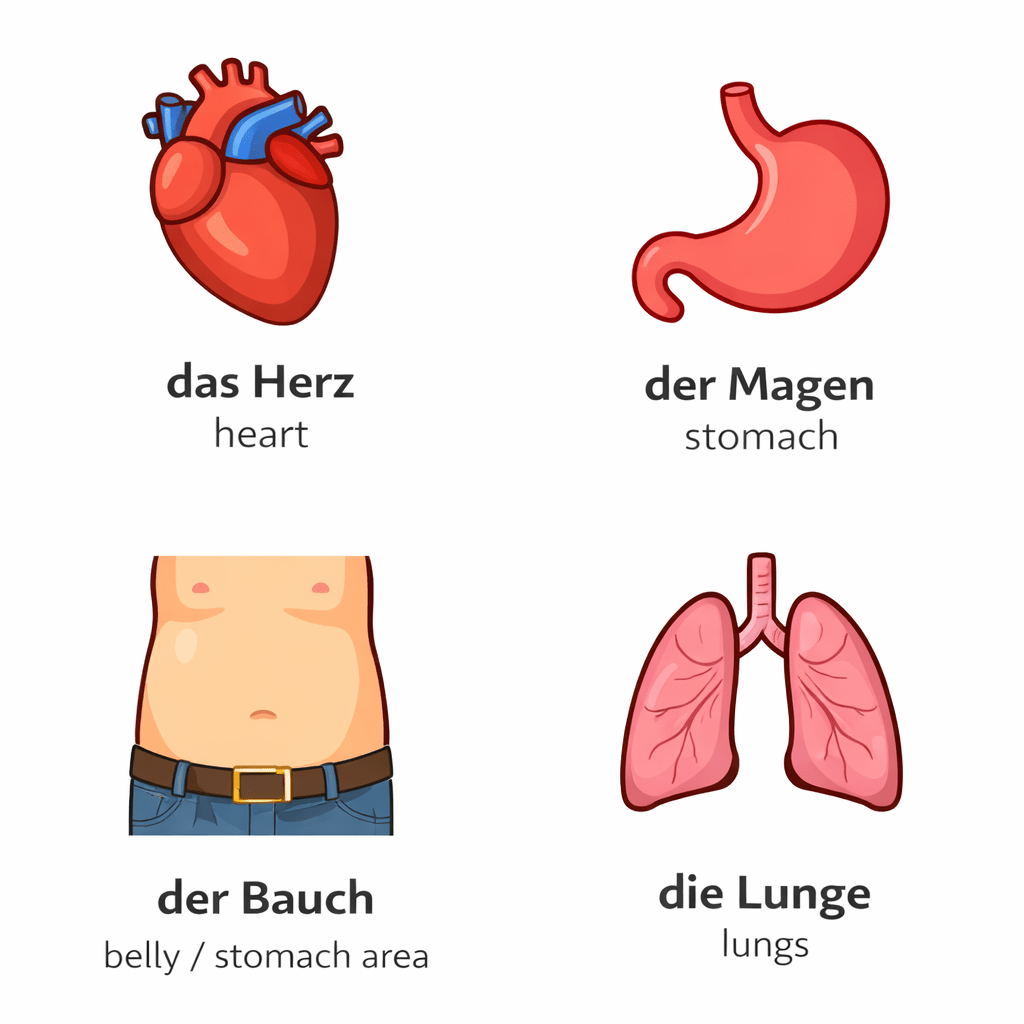
Internal Body Parts and Common Health Words
At the beginner level, you do not need a huge medical vocabulary list, but a few internal body words are worth learning because they appear in everyday life and simple health conversations.
- das Herz = heart
- der Magen = stomach
- der Bauch = belly/stomach area
- die Lunge = lungs
- die Leber = liver
- die Niere = kidney
Example sentences:
Mein Herz schlägt schnell.
My heart is beating fast.
Mein Magen tut weh.
My stomach hurts.
Ich habe Bauchschmerzen.
I have a stomachache.
That last word, Bauchschmerzen, is especially useful because it comes up often in daily speech.
Talking About Pain in German
One of the biggest reasons to learn body parts in German is to explain where something hurts.
A very important phrase is:
… tut weh = hurts
This is one of the first patterns learners should memorize because it is so practical.
Example sentences:
Mein Kopf tut weh.
My head hurts.
Mein Rücken tut weh.
My back hurts.
Mein Fuß tut weh.
My foot hurts.
Mein Bauch tut weh.
My stomach hurts.
You can also ask:
Was tut weh?
What hurts?
Wo tut es weh?
Where does it hurt?
These phrases are simple, useful, and worth practicing early.
Describing the Body in German
Body-part vocabulary is not only useful for health. It also helps you describe people in simple German.
Example sentences:
Er hat braune Augen.
He has brown eyes.
Sie hat lange Arme.
She has long arms.
Das Baby hat kleine Hände.
The baby has small hands.
Mein Bruder hat große Füße.
My brother has big feet.
This is also a good place to notice that body words often combine with adjectives. If you want to understand why German words change in phrases like große Hände or braune Augen, our German adjective endings post can help.
Body Parts in Everyday Situations
Body-part vocabulary becomes much easier to remember when you connect it to real-life situations.
You might use these words when:
- talking to a doctor
- explaining pain or discomfort
- describing someone’s appearance
- following simple exercise instructions
- talking about clothing, shoes, or injuries
For example:
Ich habe kalte Hände.
I have cold hands.
Er hat sich am Knie verletzt.
He hurt his knee.
Sie wäscht ihr Gesicht.
She washes her face.
Das Kind hält die Hand seiner Mutter.
The child is holding his mother’s hand.
For more words and phrases you’ll need to visit the doctor in Germany, check out the German hospital vocabulary post.
A Small Grammar Tip That Helps
German body parts are nouns, so each one has a grammatical gender and article:
- der Kopf
- die Hand
- das Bein
It helps a lot if you learn the article together with the noun from the beginning. Otherwise, you often end up relearning the word later.
If this still feels confusing, our German noun gender guide is a helpful next step.
Easy Questions About Body Parts in German
Here are a few simple questions to use as a beginner:
Was ist das?
What is that?
Wo ist dein Arm?
Where is your arm?
Wie viele Finger hast du?
How many fingers do you have?
Example answers:
Das ist meine Hand.
That is my hand.
Hier ist mein Fuß.
Here is my foot.
Ich habe zehn Finger.
I have ten fingers.
These kinds of questions are especially useful in early lessons and practice activities.
FAQ: Body Parts in German
What is the body called in German?
Body in German is der Körper.
What is the head called in German?
Head in German is der Kopf.
What is the German word for hand?
Hand in German is die Hand.
How do you say “my head hurts” in German?
You say: Mein Kopf tut weh.
What is the word for eye in German?
Eye in German is das Auge. The plural is die Augen.
Final Thoughts
Learning body parts in German gives you vocabulary you can actually use right away. These are not abstract words that only belong in a textbook. You need them for health, daily conversation, describing people, and understanding simple German instructions.
Start with the core words like Kopf, Hand, Bein, Auge, and Fuß. Then practice them in short, useful sentences. Once these words feel natural, basic German becomes much easier to use in real life.
To keep building your beginner vocabulary, visit our learn German vocabulary hub.