Learning basic A1 and A2 German vocabulary is one of the fastest ways to start understanding and speaking the language. Before you worry about perfect grammar, you need words you can recognize, remember, and use in everyday situations.
This page is your starting point. You’ll find beginner German vocabulary grouped by topic so you can build a strong foundation step by step. Whether you’re learning for travel, family, work, or personal interest, these are the words that help you begin using German right away.
What to Learn
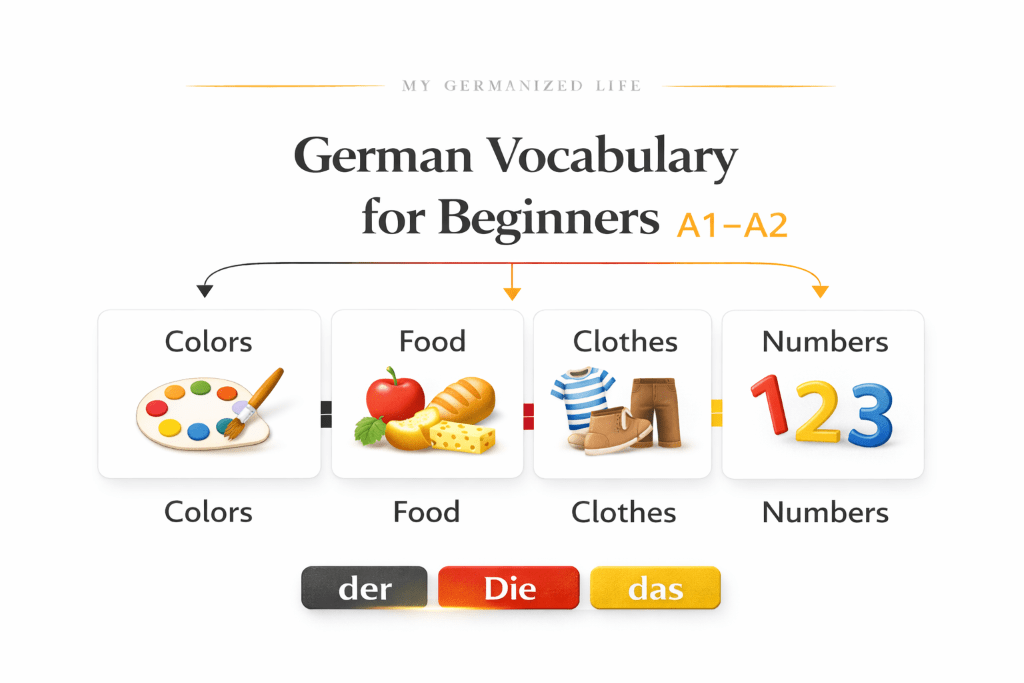
On this page, you can start learning basic German vocabulary in practical categories such as:
Starting Vocabulary
Everyday Vocabulary
Food & Dining Vocabulary
Fast-Track Your German Vocabulary
A Better Way to Learn German Vocabulary
A lot of beginners make the same mistake: they try to memorize huge lists of words without context. That usually leads to forgetting most of them.
A better approach is to learn vocabulary in small groups, hear it used in context, and review it often. That’s exactly how you’ll build lasting German skills.
At My Germanized Life, the focus is on helping you learn German in a way that feels clear, practical, and manageable. That means:
- useful vocabulary instead of random word lists
- simple explanations for beginners
- example sentences that show how words are really used
- support with pronunciation and common mistakes
- lessons that connect vocabulary and grammar naturally
FAQ about German Vocabulary for Beginners
What is basic German vocabulary?
Basic German vocabulary includes the most common beginner words and phrases used in everyday life. This usually includes greetings, numbers, family words, food terms, question words, common verbs, and simple expressions.
How many German words do beginners need?
Beginners do not need thousands of words right away. A few hundred high-frequency words can already help you understand simple German and start forming basic sentences.
What German words should I learn first?
Start with greetings, polite expressions, numbers, question words, common verbs, family vocabulary, food words, and daily life vocabulary. These are the words you will see and hear most often.
Is vocabulary more important than grammar?
You need both, but vocabulary gives you something to work with immediately. Grammar helps you organize the language, but without words, you cannot say much at all.
What is the best way to memorize German vocabulary?
The best way is to learn words by topic, review them regularly, hear them in context, and use them in example sentences. Short, consistent practice works better than trying to memorize long lists all at once.
Can I learn German vocabulary without living in Germany?
Yes. You can build strong vocabulary skills from anywhere if you use good lessons, repetition, listening practice, and real examples.