German Phrases for Beginners (A1/A2)
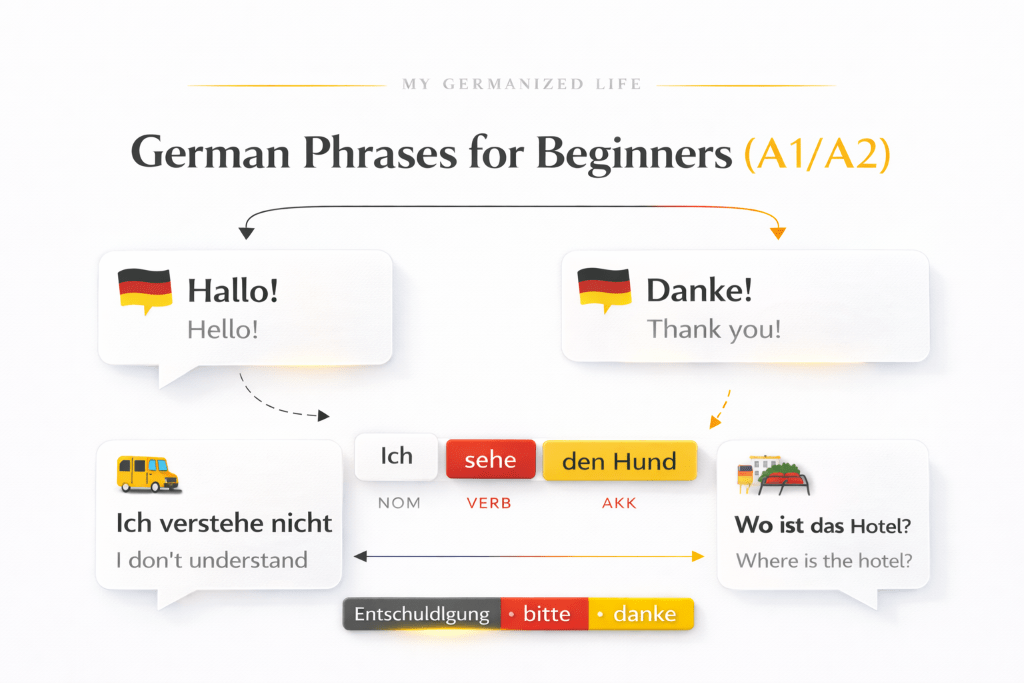
Learning German phrases for beginners is one of the fastest ways to start using the language in real life. These expressions help you introduce yourself, ask simple questions, order food, travel, shop, and handle everyday situations with more confidence.
This page brings together beginner German phrases for A1 and A2 learners so you can start speaking from day one. You will find essential German phrases grouped by topic, along with English translations and practical examples.
Whether you are learning German for travel, daily life, family, work, or self-study, these are the common German phrases that make the biggest difference early on.
Greetings and Introductions
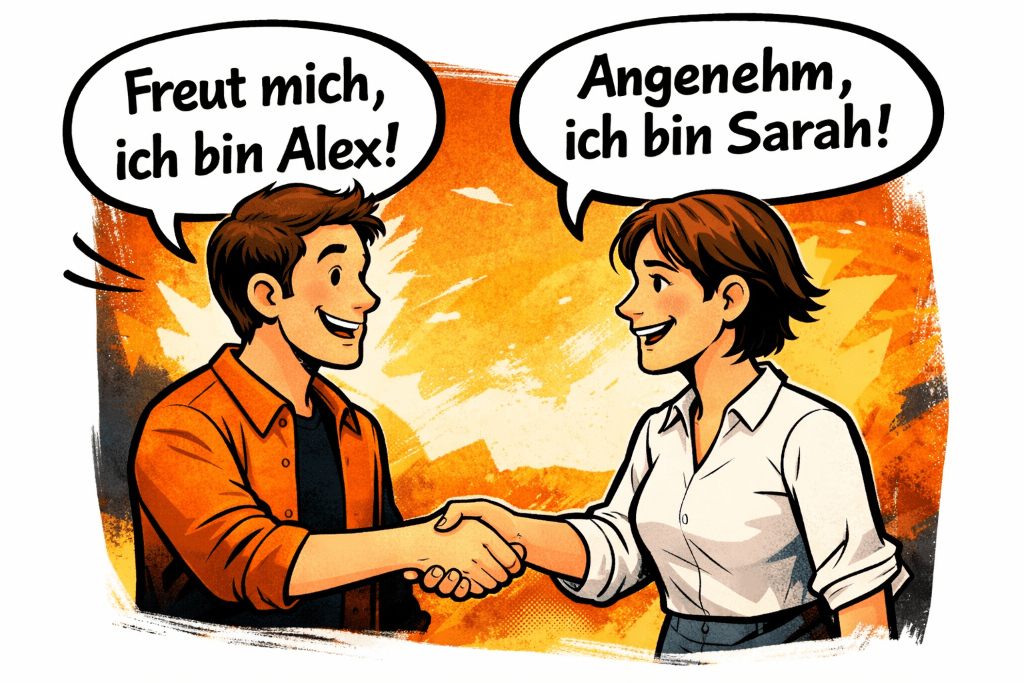
Greetings are some of the most important everyday German phrases for beginners. You will use them constantly, and they help you sound polite right away.
- Hallo = Hello
- Guten Morgen = Good morning
- Guten Tag = Good day
- Guten Abend = Good evening
- Tschüss = Bye
- Auf Wiedersehen = Goodbye
- Wie heißt du? = What is your name?
- Ich heiße Anna. = My name is Anna.
- Ich bin Tom. = I am Tom.
- Freut mich. = Nice to meet you.
- Wie geht’s? = How are you?
- Mir geht’s gut. = I’m doing well.
These beginner German greeting and introduction phrases are useful because they teach you the basics of everyday interaction without requiring much grammar.
Polite German Phrases
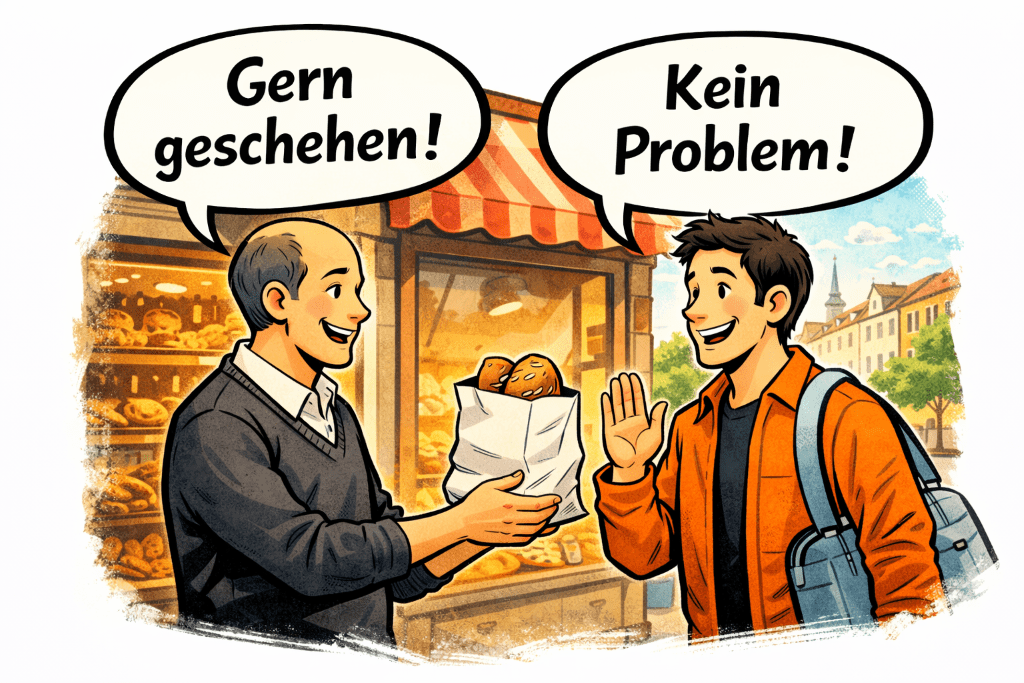
Polite German phrases are some of the most useful common German phrases because they work in almost every setting.
- Bitte = Please / You’re welcome
- Danke = Thank you
- Vielen Dank = Thank you very much
- Gern geschehen = You’re welcome
- Entschuldigung = Excuse me / Sorry
- Es tut mir leid. = I’m sorry.
- Kein Problem. = No problem.
- Ja = Yes
- Nein = No
- Vielleicht = Maybe
These are the kind of essential German phrases that make your German sound more natural and respectful from the beginning.
Talking About Yourself
A1 and A2 learners need to be able to say basic things about themselves. You do not need a dramatic autobiography. You need short, useful phrases.
- Ich komme aus den USA. = I come from the USA.
- Ich wohne in Texas. = I live in Texas.
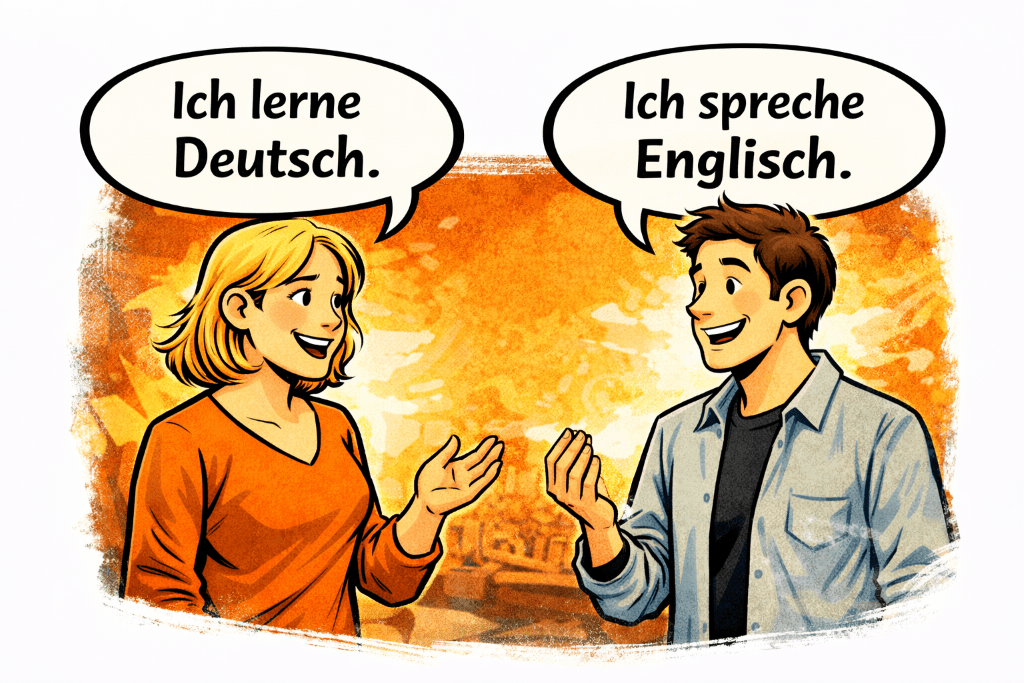
- Ich spreche Englisch. = I speak English.
- Ich lerne Deutsch. = I am learning German.
- Ich bin 30 Jahre alt. = I am 30 years old.
- Ich arbeite als Lehrer. = I work as a teacher.
- Ich studiere Deutsch. = I study German.
- Ich mag Musik. = I like music.
These A1 German phrases for Talking About Yourself are perfect for introductions, classroom conversations, and early speaking practice.
Family and Friends
Talking about family is a common beginner topic and a good way to practice personal information.
- Das ist meine Familie. = That is my family.
- Ich habe einen Bruder. = I have a brother.
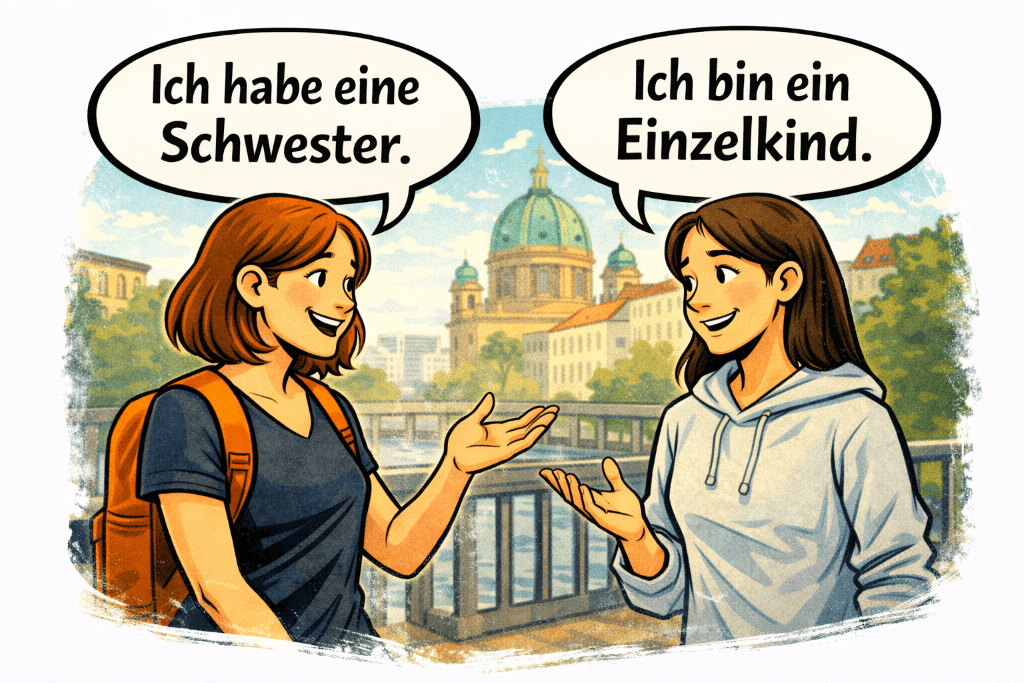
- Ich habe eine Schwester. = I have a sister.
- Ich bin ein Einzelkind. = I’m an only child.
- Meine Mutter heißt … = My mother’s name is …
- Mein Vater arbeitet viel. = My father works a lot.
- Ich bin verheiratet. = I am married.
- Ich bin ledig. = I am single.
- Ich habe Kinder. = I have children.
- Wir wohnen zusammen. = We live together.
These common German Family and Friends phrases use high-frequency vocabulary and simple sentence patterns.
Daily Routine Phrases
Daily routine language is ideal for beginners because you can repeat it often and connect it to real life.
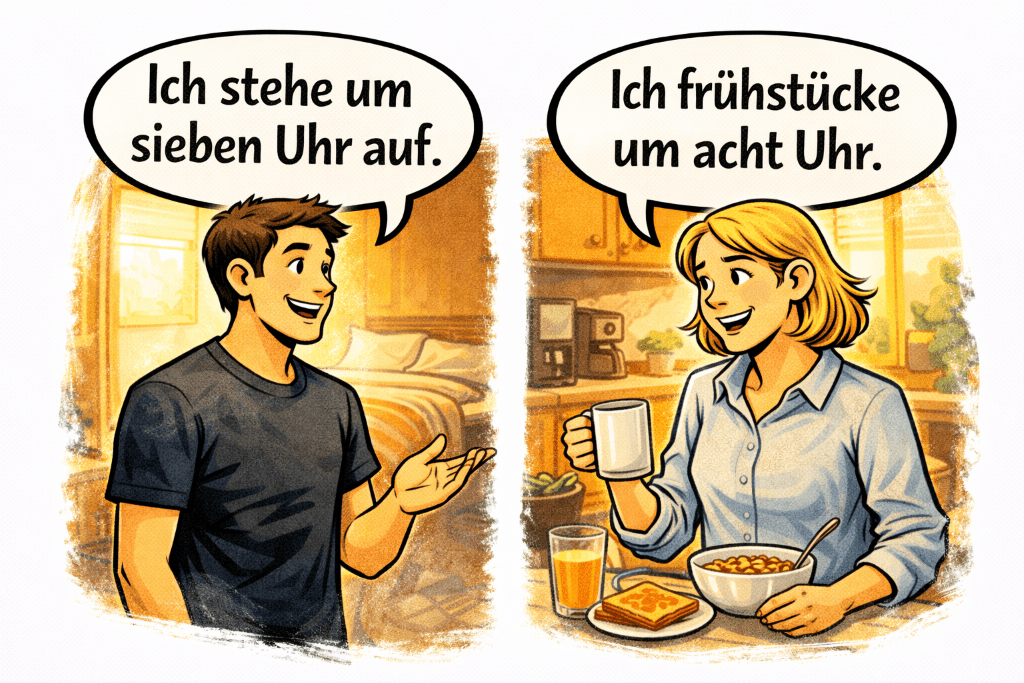
- Ich stehe um sieben Uhr auf. = I get up at seven o’clock.
- Ich frühstücke um acht Uhr. = I eat breakfast at eight o’clock.
- Ich gehe zur Arbeit. = I go to work.
- Ich lerne Deutsch am Abend. = I study German in the evening.
- Ich komme um sechs Uhr nach Hause. = I come home at six o’clock.
- Ich koche das Abendessen. = I cook dinner.
- Ich sehe fern. = I watch TV.
- Ich gehe schlafen. = I go to sleep.
These everyday German phrases help reinforce basic verbs, time expressions, and sentence structure.
Shopping Phrases
Shopping phrases are some of the most practical German phrases for beginners because they work in real situations right away.
- Ich suche … = I am looking for …
- Haben Sie das in einer anderen Größe? = Do you have that in another size?
- Wie viel kostet das? = How much does that cost?
- Das ist zu teuer. = That is too expensive.
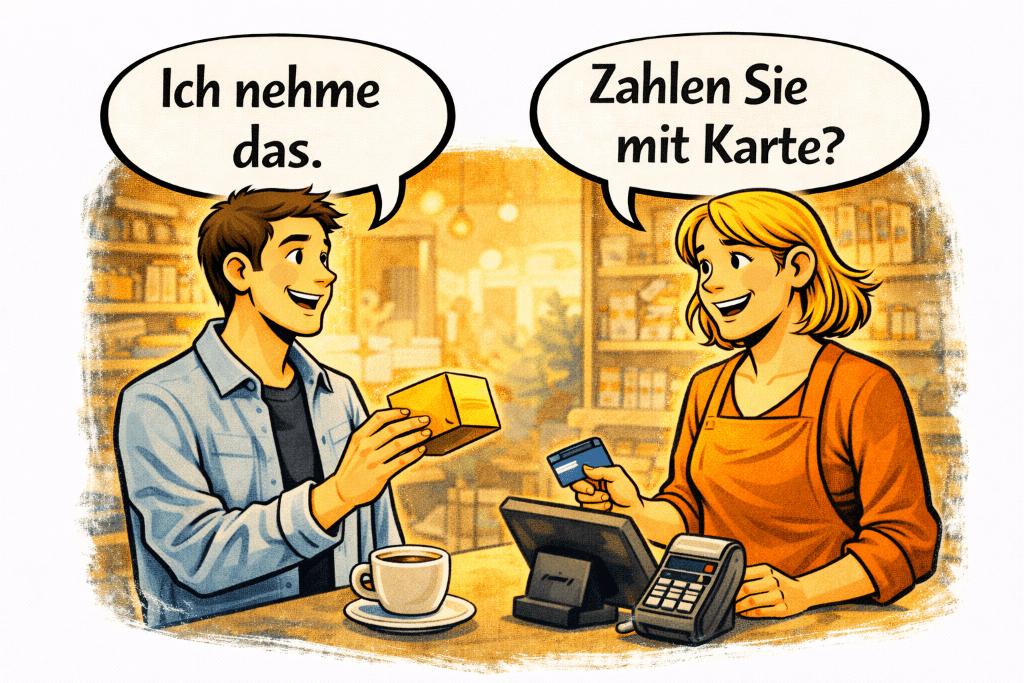
- Ich nehme das. = I’ll take that.
- Kann ich mit Karte zahlen? = Can I pay by card?
- Wo ist die Kasse? = Where is the checkout?
- Ich möchte nur schauen. = I’m just looking.
These phrases pair well with beginner topics like clothing, colors, and numbers.
Restaurant and Café Phrases
Food and dining language is one of the best beginner topics because it is practical, memorable, and highly useful.
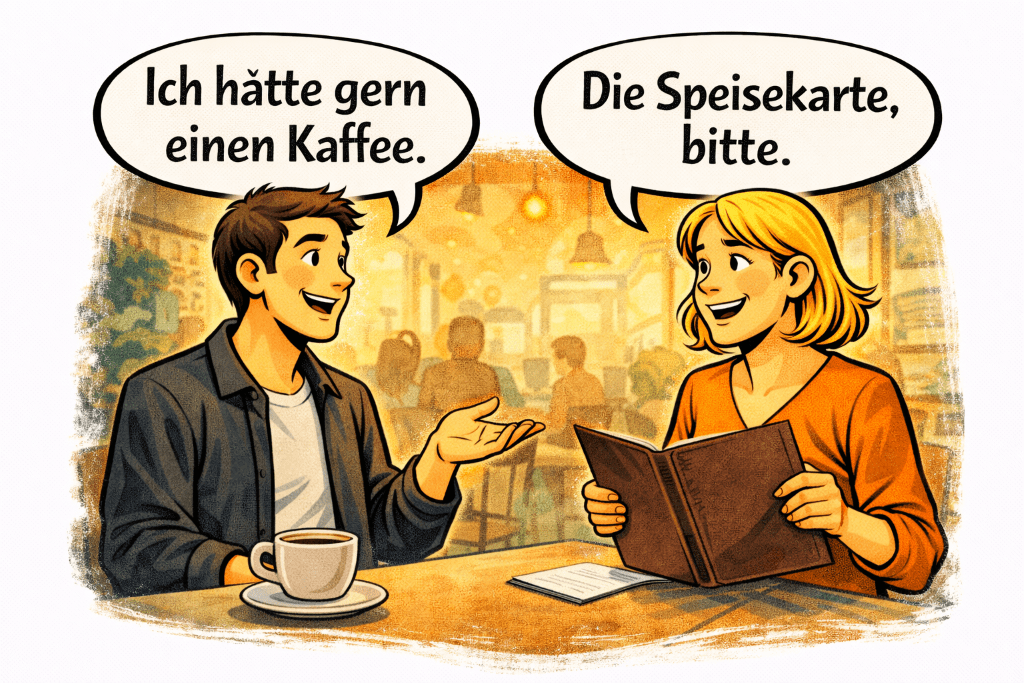
- Ich hätte gern einen Kaffee. = I would like a coffee.
- Ich möchte einen Salat. = I would like a salad.
- Die Speisekarte, bitte. = The menu, please.
- Was empfehlen Sie? = What do you recommend?
- Ich bin Vegetarier. / Ich bin Vegetarierin. = I am a vegetarian.
- Ohne Zwiebeln, bitte. = Without onions, please.
- Noch ein Wasser, bitte. = Another water, please.
- Die Rechnung, bitte. = The bill, please.
- Zusammen oder getrennt? = Together or separate?
These beginner German restaurant phrases are especially useful for travel and dining out.
Travel and Directions Phrases
Beginner German travel phrases are a great survival resource for getting around Germany.
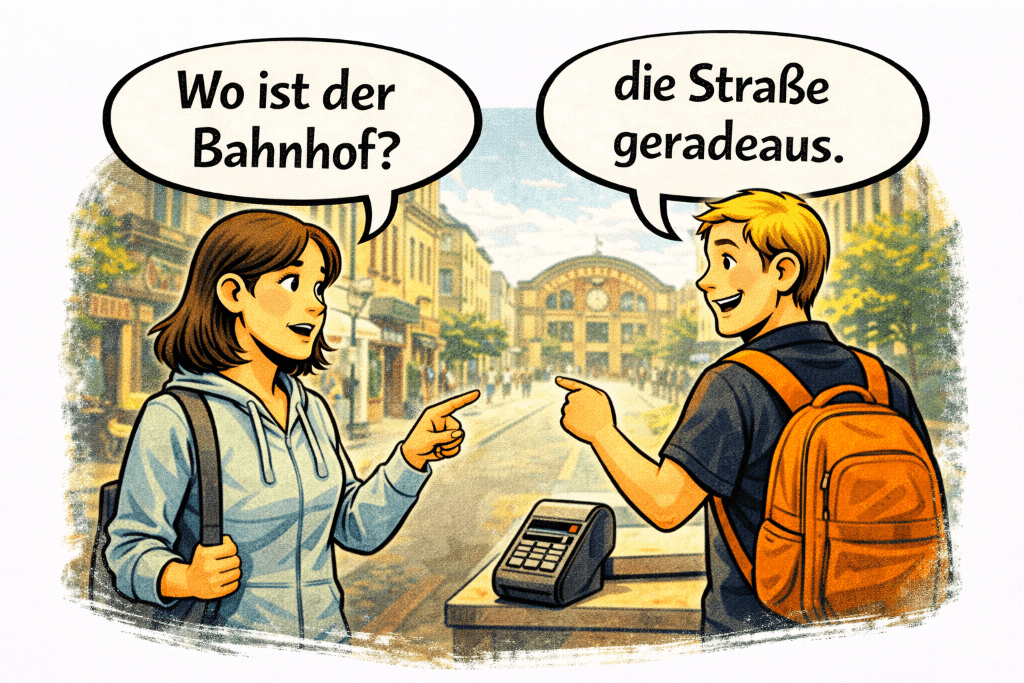
- Wo ist der Bahnhof? = Where is the train station?
- Wo ist die Bushaltestelle? = Where is the bus stop?
- Ich brauche ein Ticket nach Berlin. = I need a ticket to Berlin.
- Wann fährt der Zug ab? = When does the train leave?
- Ist das der richtige Zug? = Is this the correct train?
- Können Sie mir helfen? = Can you help me?
- Ich habe mich verlaufen. = I am lost.
- Wie komme ich zum Hotel? = How do I get to the hotel?
- Links = Left
- Rechts = Right
- Geradeaus = Straight ahead
These are some of the most useful A1/A2 German phrases for real-world situations.
Doctor and Pharmacy Phrases
Medical situations are stressful enough without a language barrier. These simple German phrases can help beginners handle basic health problems more clearly.
- Ich brauche einen Arzt. = I need a doctor.
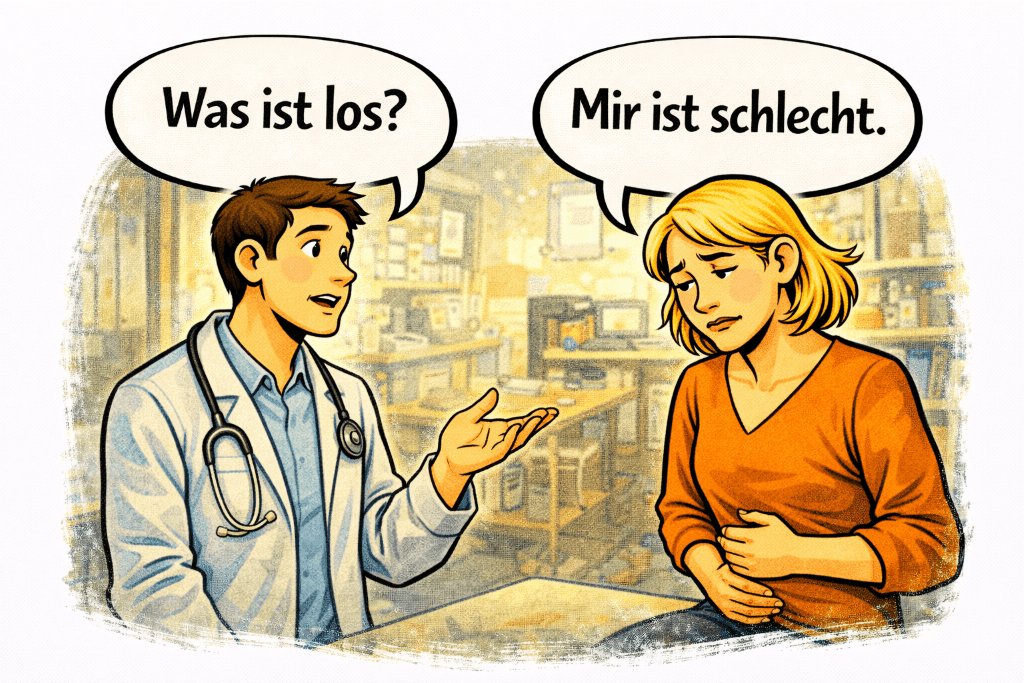
- Mir ist schlecht. = I feel sick.
- Ich habe Kopfschmerzen. = I have a headache.
- Ich habe Fieber. = I have a fever.
- Wo ist die Apotheke? = Where is the pharmacy?
- Ich brauche Medizin. = I need medicine.
- Ich habe Schmerzen hier. = I have pain here.
- Können Sie mir helfen? = Can you help me?
- Ich habe einen Termin. = I have an appointment.
These are especially useful beginner German doctor phrases for travel, daily life, and emergencies.
German Cooking Phrases for Beginners
Cooking language at A1 should stay very simple and familiar.
- Ich koche. = I cook.
- Ich mache das Essen. = I make the food.
- Ich brauche Wasser. = I need water.
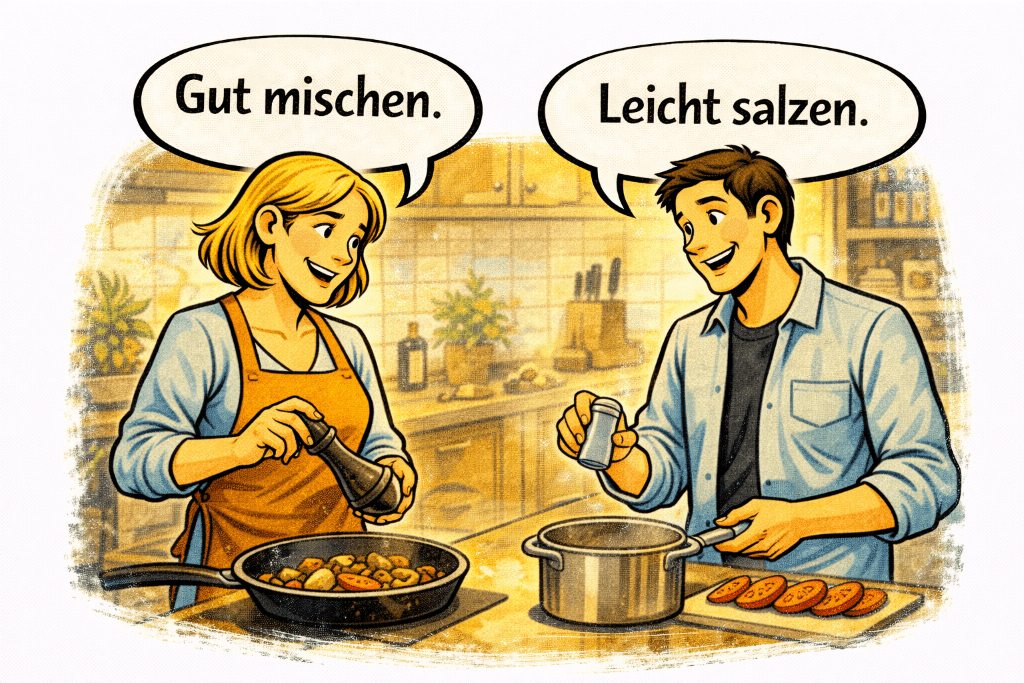
- Ich brauche Salz. = I need salt.
- Die Suppe ist heiß. = The soup is hot.
- Der Kaffee ist fertig. = The coffee is ready.
- Das Essen ist gut. = The food is good.
- Ich esse jetzt. = I am eating now.
- Wir essen zusammen. = We are eating together.
- Ich bin hungrig. = I am hungry.
Learn more German cooking phrases for beginners.
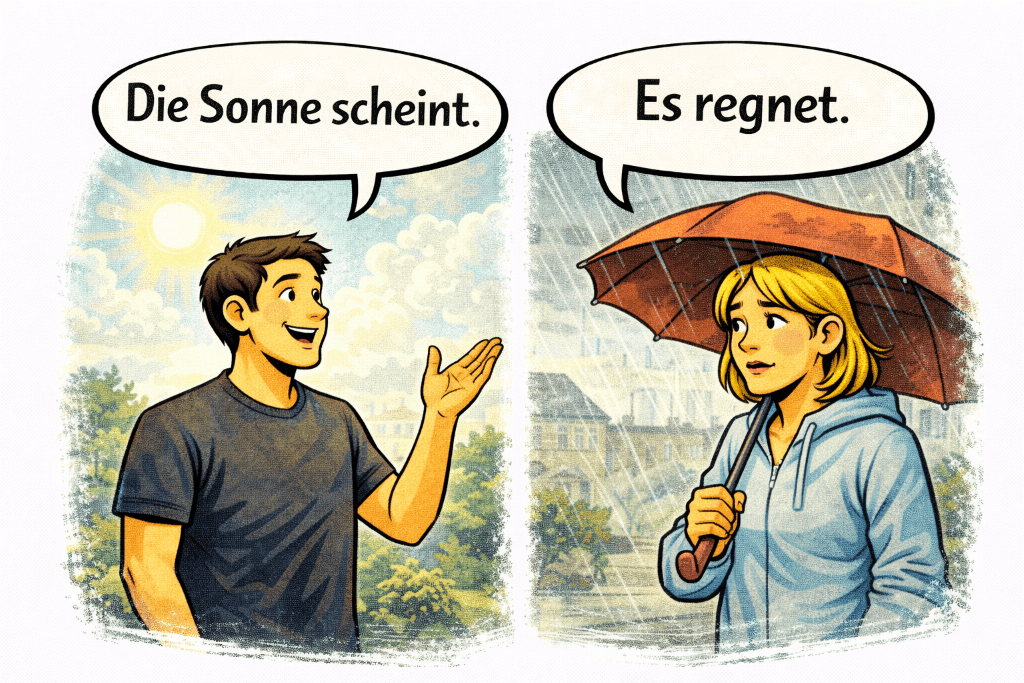
German Weather Phrases for Beginners
These fit A1 much better because they use very common structures.
- Wie ist das Wetter? = How is the weather?
- Das Wetter ist gut. = The weather is good.
- Das Wetter ist schlecht. = The weather is bad.
- Es ist warm. = It is warm.
- Es ist kalt. = It is cold.
- Es ist sonnig. = It is sunny.
- Es regnet. = It is raining.
- Es schneit. = It is snowing.
- Es ist windig. = It is windy.
- Heute ist das Wetter schön. = The weather is nice today.
Get more German weather phrases for beginners.
How to Learn Beginner German Phrases Effectively
The best way for beginners to learn German phrases is not to stare at a giant list once and hope your brain suddenly becomes German. It is better to learn phrases in small groups, repeat them often, and connect them to real situations.
Learn phrases in chunks
Memorizing a full expression is often more useful than memorizing one isolated word. Learning Wie viel kostet das? is much more helpful than memorizing only the verb kosten and viel and wie separately.
Say the phrases out loud
Read phrases aloud. Repeat them slowly, then naturally. This helps with memory, pronunciation, and speaking confidence.
Group phrases by situation
Study them by theme:
- greetings
- shopping
- travel
- restaurants
- daily routine
- medical situations
That makes beginner German phrases easier to remember because they are tied to context.
Reuse sentence patterns
Many common German phrases follow useful patterns:
- Ich möchte …
- Ich habe …
- Wo ist …?
- Kann ich …?
Once you know the pattern, you can swap in new vocabulary and build many new sentences. Learn German grammar alongside vocabulary and phrases.
Connect Phrases to Vocabulary and Grammar
Phrases work best when they are backed up by focused German vocabulary and a little grammar. Restaurant phrases make more sense when you also know food vocabulary. Daily routine phrases become easier when you know common verbs and present tense forms. Start with A1/A2 level German vocabulary for beginners.
FAQ: German Phrases for Beginners
What are the most important German phrases for beginners?
The most important German phrases for beginners are greetings, polite expressions, basic questions, restaurant phrases, travel phrases, and simple self-introduction phrases. These are the expressions that help you handle everyday situations first.
How many German phrases should a beginner learn first?
A beginner does not need to memorize hundreds of phrases at once. Start with 20 to 30 essential German phrases you can actually use. Once those feel familiar, add more by topic.
Are phrases better than vocabulary for beginners?
Phrases and vocabulary work best together, but phrases are often easier to use right away. Vocabulary gives you the words. Phrases show you how those words work in real communication.
What level are beginner German phrases?
Most beginner German phrases fall into the A1 and A2 range. These levels focus on everyday situations, simple conversations, personal information, travel, food, shopping, and common questions.
How can I remember German phrases more easily?
The best way to remember beginner German phrases is to study them in categories, repeat them out loud, use them in short dialogues, and connect them to real situations. Regular repetition works much better than trying to cram everything at once.
Can I learn German by memorizing phrases?
Memorizing phrases can help you start speaking faster, but it should not be the only thing you do. The best approach is to combine common German phrases with vocabulary, pronunciation, and basic grammar so you understand how the language works.
Learn German Phrases for Beginners
Learning German phrases for beginners is one of the most effective ways to start speaking German with confidence. You do not need to know everything before you say something useful. You need the right beginner German phrases for real situations.
When you focus on essential German phrases for greetings, daily life, shopping, travel, restaurants, and simple conversations, you build practical communication skills much faster. You also make grammar easier because you start recognizing sentence patterns in context.
Start with the most useful phrases. Repeat them often. Say them out loud. Then build from there.
The goal is not to sound perfect right away. The goal is to start using German in a way that feels real.