German Colors: Basic Vocabulary for Beginners
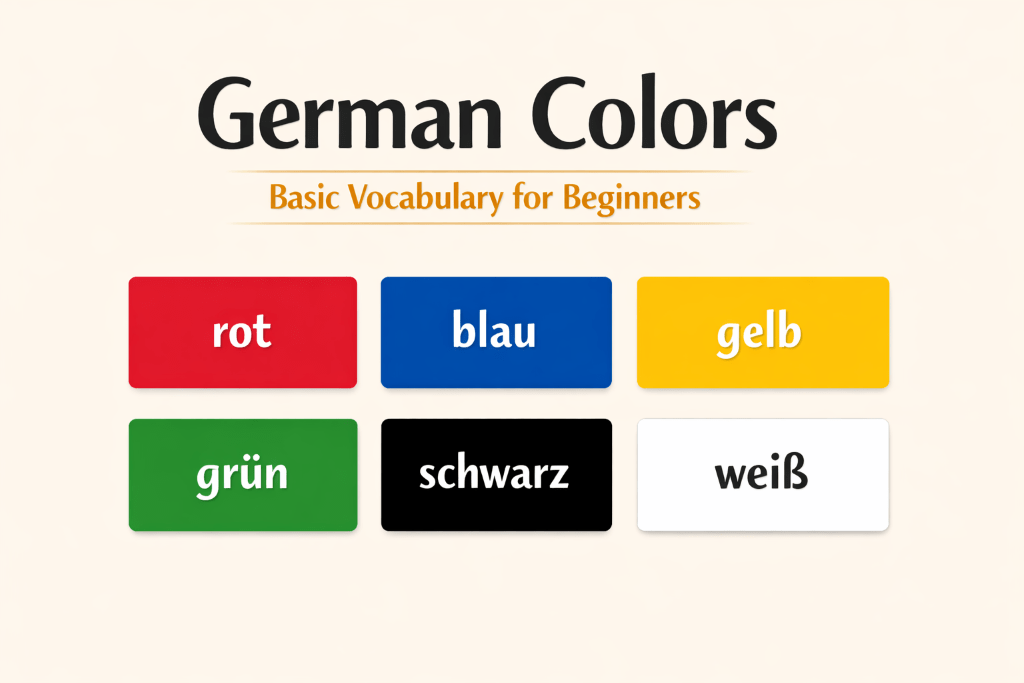
Learning German colors is one of the easiest ways to build useful beginner vocabulary fast. You will use colors when describing clothes, food, objects, people, places, and everyday situations. They come up constantly in real conversations, which makes them a smart place to start.
In this guide, you’ll learn the most important German colors, a few helpful descriptive color words, and simple example sentences so you can start using them naturally.
If you’re still building your basics, start with the German vocabulary for beginners guide to learn more essential everyday words.
Below, you can download German Color Vocabulary Flashcards for free.
Understanding German noun gender will help you use these words correctly in sentences.
The Basic Colors in German
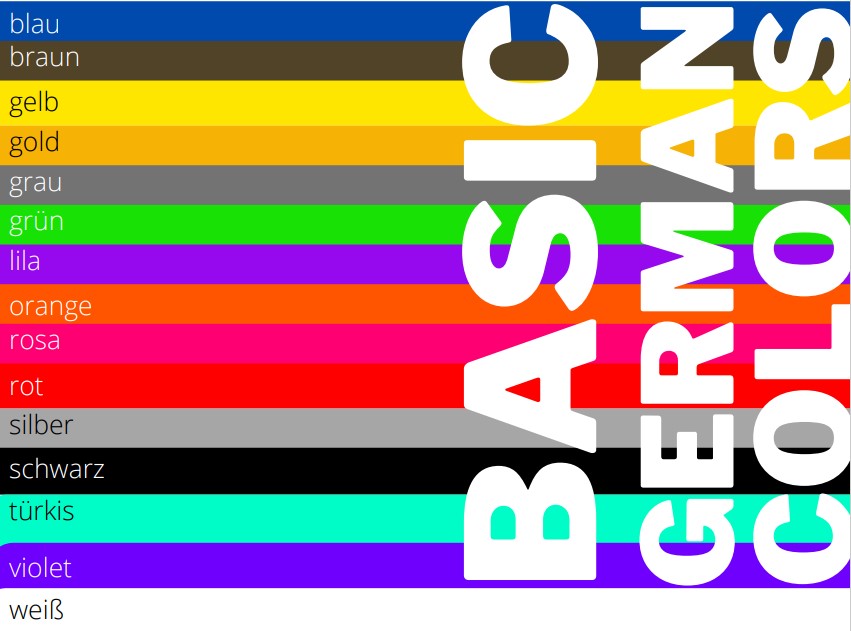
All the colors you need to speak fundamental German are listed below in alphabetical order.
- blau – blue
- braun – brown
- gelb – yellow
- gold – gold
- grau – gray
- grün – green
- lila – purple
- orange – orange
- rosa – pink
- rot – red
- silber – silver
- schwarz – black
- türkis – turquoise
- violet – violett
- weiß – white
blau – blue
braun – brown
gelb – yellow
gold – gold
grau – gray
grün – green
lila – purple
orange – orange
rosa – pink
rot – red
silber – silver
schwarz – black
türkis – turquoise
violet – violett
weiß – white
Many of these words look familiar, but the pronunciation is different in German, especially with words like grün, weiß, and grau.
Example Sentences
Das Auto ist rot.
The car is red.
Meine Tasche ist schwarz.
My bag is black.
Ich mag blaue Kleidung.
I like blue clothing.
Die Blume ist gelb.
The flower is yellow.
Sein Fahrrad ist grün.
His bicycle is green.
Light, Dark, and Colorful in German
Once you know the basic color words, the next step is to learn how to describe shades simply.
- hell = light
- dunkel = dark
- bunt = colorful
- pastell = pastel
These words help you describe colors more naturally.
Common Combinations
- hellblau = light blue
- dunkelgrün = dark green
- hellgrau = light gray
- dunkelrot = dark red
German often combines these words into one longer color word.
Example Sentences
Sie trägt ein hellblaues Kleid.
She is wearing a light blue dress.
Das Sofa ist dunkelgrau.
The sofa is dark gray.
Das Bild ist sehr bunt.
The picture is very colorful.
How German Colors Work in Sentences
German colors are often used as adjectives. That means they describe a noun.
Here is the basic idea:
- Das Haus ist weiß.
The house is white. - Ich habe ein weißes Haus.
I have a white house.
In the first sentence, weiß comes after ist, so it stays simple.
In the second sentence, weiß comes before the noun Haus, so it changes to weißes.
You do not need to master adjective endings right away to start learning colors, but it helps to notice that German color words often change a little when they come before a noun.
If you want to understand why color words sometimes change before a noun, see our German adjective endings guide.
Common Things to Describe with Colors
Colors become much easier to remember when you use them with real, everyday nouns.
Clothes
- das Hemd = shirt
- die Jacke = jacket
- das Kleid = dress
- die Schuhe = shoes
Examples:
Er trägt ein schwarzes Hemd.
He is wearing a black shirt.
Ich suche eine rote Jacke.
I am looking for a red jacket.
Objects
- das Auto = car
- die Tasche = bag
- der Tisch = table
- das Fahrrad = bicycle
Examples:
Wir haben ein weißes Auto.
We have a white car.
Das Fahrrad ist blau.
The bicycle is blue.
Nature
- der Himmel = sky
- das Gras = grass
- die Blume = flower
- die Sonne = sun
Examples:
Der Himmel ist blau.
The sky is blue.
Das Gras ist grün.
The grass is green.
Die Sonne ist gelb.
The sun is yellow.
German Colors in Everyday Questions
These are simple questions you may hear or use in real conversation.
Welche Farbe hat das?
What color is that?
Welche Farbe magst du?
What color do you like?
Ist das schwarz oder blau?
Is that black or blue?
Example Answers
Das ist grün.
That is green.
Ich mag rot und blau.
I like red and blue.
Nein, das ist grau.
No, that is gray.
Example Sentences with German Colors
Here are more beginner-friendly examples to help the vocabulary stick.
Mein Pullover ist grau.
My sweater is gray.
Sie hat eine rosa Tasche.
She has a pink bag.
Wir kaufen einen braunen Tisch.
We are buying a brown table.
Das Buch ist orange.
The book is orange.
Ich möchte ein grünes T-Shirt.
I would like a green T-shirt.
Die Wände sind weiß.
The walls are white.
Seine Schuhe sind schwarz.
His shoes are black.
Tips for Learning German Colors Faster
Start with the most common colors
Do not try to memorize every possible shade. Focus on the basic list first:
- rot
- blau
- gelb
- grün
- schwarz
- weiß
- grau
- braun
Use colors with real objects
It is easier to remember ein rotes Auto than just rot by itself.
Notice adjective endings, but do not obsess over them
At the beginner level, the important thing is recognizing the color word and using it in simple sentences.
Practice by looking around you
Describe what you see:
- Der Tisch ist braun.
- Die Tür ist weiß.
- Mein Handy ist schwarz.
This is one of the easiest ways to turn passive vocabulary into active vocabulary.
FAQ About German Colors
What is blue in German?
Blue in German is blau.
What is red in German?
Red in German is rot.
How do you say black and white in German?
Black is schwarz and white is weiß.
Is green in German grün?
Yes. Grün means green.
Are German colors used like adjectives?
Yes. German colors are often used as adjectives, which means they describe nouns. Sometimes their endings change depending on where they appear in the sentence.
It also helps to understand German noun gender when practicing colors with everyday objects.
Final Thoughts
German colors are a simple but important part of beginner vocabulary. They come up in everyday conversation all the time, and they are easy to practice with real objects around you. Start with the basic colors first, then add light and dark shades as you get more comfortable.
To keep building your skills, explore more beginner topics in our learn German vocabulary hub.