German Menu Vocabulary: How to Read a Menu in German
German Menu Vocabulary: How to Read a Menu in German
Reading German menu vocabulary can feel overwhelming at first, especially if you don’t recognize common food terms. The good news is that most German menus follow predictable patterns. Once you learn a few key words, you can quickly understand what you’re ordering.
If you are new, start with the German food vocabulary guide to learn the most common words for meals and ingredients.
Common German Menu Sections
Most German menus are organized into familiar categories. Once you know these section names, you can scan a menu much faster.
- Vorspeisen = appetizers
- Hauptgerichte = main dishes
- Beilagen = side dishes
- Desserts = desserts
- Getränke = drinks
Learn the most common beverage terms in the German drinks vocabulary guide.
You may also see:
- die Speisekarte = menu
- das Tagesgericht = daily special
- die Spezialitäten = specialties
- das Frühstück = breakfast
- das Mittagessen = lunch
- das Abendessen = dinner
German Menu Vocabulary List
Here are some of the most useful German menu words to know.
Appetizers in German
Appetizers usually appear under Vorspeisen.
- die Vorspeise = appetizer
- die Suppe = soup
- der Salat = salad
- das Brot = bread
- die Tomatensuppe = tomato soup
- der gemischte Salat = mixed salad
Example:
- Ich hätte gern die Suppe als Vorspeise.
I would like to have the soup as an appetizer.
Main Dishes in German
Main dishes are usually listed under Hauptgerichte.
- das Hauptgericht = main dish
- das Gericht = dish
- das Fleisch = meat
- der Fisch = fish
- das Hähnchen = chicken
- das Schnitzel = Schnitzel
- die Wurst = sausage
- das vegetarische Gericht = vegetarian dish
- das vegane Gericht = vegan dish
Example:
- Das Schnitzel ist ein beliebtes Hauptgericht.
Schnitzel is a popular main dish.
Side Dishes in German
Side dishes are listed under Beilagen.
- die Beilage = side dish
- die Kartoffeln = potatoes
- der Reis = rice
- die Nudeln = pasta
- das Gemüse = vegetables
- die Pommes = fries
- das Brot = bread
Example:
- Zum Fisch gibt es Reis als Beilage.
The fish comes with rice as a side dish.
Desserts in German
Desserts appear under Desserts or Nachspeisen.
- das Dessert = dessert
- der Nachtisch = dessert
- der Kuchen = cake
- das Eis = ice cream
- die Schokolade = chocolate
- der Apfelstrudel = apple strudel
Example:
- Zum Nachtisch nehme ich ein Stück Kuchen.
For dessert, I will have a piece of cake.
Useful Words You Will See on a German Menu
These small words matter because they help you understand how the dish is prepared.
- mit = with
- ohne = without
- frisch = fresh
- hausgemacht = homemade
- warm = warm
- kalt = cold
- scharf = spicy
- süß = sweet
- salzig = salty
- gebraten = fried
- gegrillt = grilled
- gekocht = cooked
- gebacken = baked
- geräuchert = smoked
Examples:
- Schnitzel mit Kartoffeln = schnitzel with potatoes
- Salat ohne Zwiebeln = salad without onions
- hausgemachte Suppe = homemade soup
- gegrillter Fisch = grilled fish
Common Ingredients on German Menus
These words often appear on restaurant menus.
- das Schweinefleisch = pork
- das Rindfleisch = beef
- der Käse = cheese
- die Zwiebel = onion
- der Pilz = mushroom
- die Soße = sauce
- das Ei = egg
- der Schinken = ham
- das Huhn = chicken
- der Apfel = apple
- die Kartoffel = potato
- die Tomate = tomato
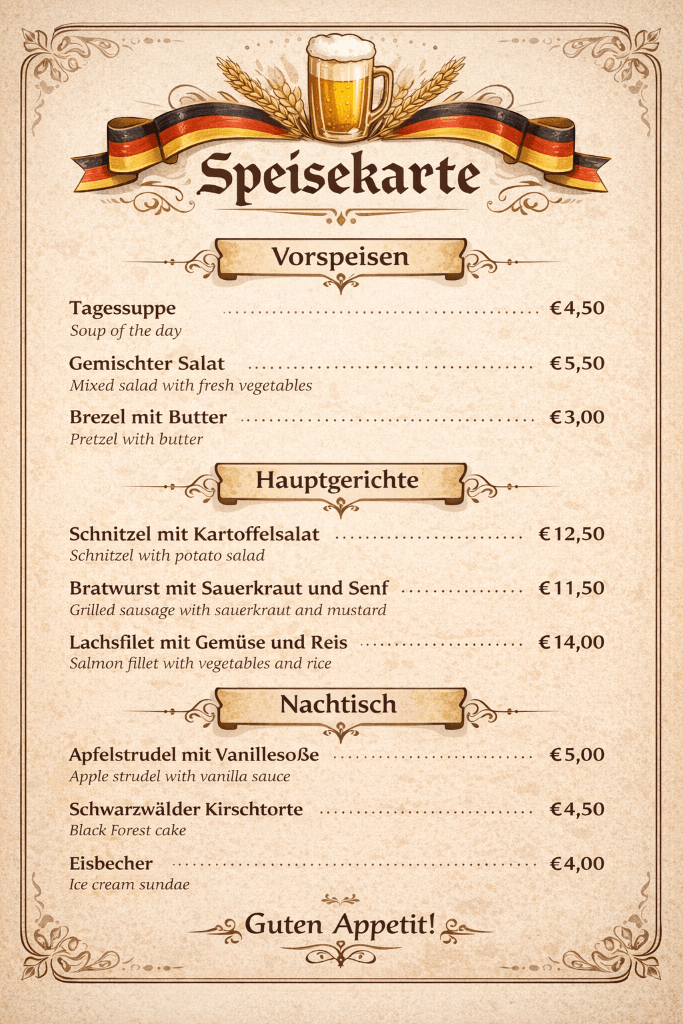
Example: Reading a German Menu
Here are a few realistic examples of what you might see.
Gemischter Salat mit Tomaten und Käse
Mixed salad with tomatoes and cheese
Gegrillter Fisch mit Gemüse und Reis
Grilled fish with vegetables and rice
Schnitzel mit Kartoffeln und Soße
Schnitzel with potatoes and sauce
Hausgemachte Tomatensuppe
Homemade tomato soup
Apfelstrudel mit Eis
Apple strudel with ice cream
Once you understand the section titles and a few common food words, these menu items start to make a lot more sense.
How to Order from a German Menu
Knowing the menu words is helpful, but it also helps to know what to say when ordering.
Useful phrases:
- Ich hätte gern … = I would like …
- Ich nehme … = I will take …
- Was empfehlen Sie? = What do you recommend?
- Haben Sie etwas Vegetarisches? = Do you have anything vegetarian?
- Was ist das Tagesgericht? = What is the daily special?
- Ohne Zwiebeln, bitte. = Without onions, please.
- Mit Pommes, bitte. = With fries, please.
Examples:
- Ich hätte gern das Schnitzel mit Kartoffeln.
I would like the schnitzel with potatoes. - Was empfehlen Sie heute?
What do you recommend today? - Haben Sie etwas Veganes?
Do you have anything vegan?
Learn more useful expressions in our German restaurant phrases guide.
Tips for Reading a German Menu
These simple tips can help you understand a menu faster.
Start with the section headings
Look for words like Vorspeisen, Hauptgerichte, and Desserts first. That tells you what kind of item you are reading.
Look for small clue words
Words like mit, ohne, gegrillt, and hausgemacht can tell you a lot about the dish.
Focus on familiar ingredients
Even if you do not understand every word, you may recognize key items like Fisch, Käse, Tomaten, or Kartoffeln.
Do not panic over long compound words
German menus sometimes use long nouns. Try to spot the familiar part inside the word. For example, Tomatensuppe clearly contains Tomate and Suppe.
FAQ: German Menu Vocabulary
What is Speisekarte in German?
Die Speisekarte means menu in German. It is the list of food and drinks available at a restaurant.
How do you read a German menu?
Start by identifying the sections, such as appetizers, main dishes, and desserts. Then look for common food words and clue words like mit and ohne.
What are common German menu words?
Common German menu words include Vorspeise for appetizer, Hauptgericht for main dish, Beilage for side dish, and Getränke for drinks.
What does mit mean on a German menu?
Mit means with. For example, Schnitzel mit Kartoffeln means schnitzel with potatoes.
What does ohne mean on a German menu?
Ohne means without. For example, Salat ohne Zwiebeln means salad without onions.
How Do You Say “Check, Please” in German?
In German restaurants, you don’t ask for the “check” the same way you would in English. Instead, you typically say:
👉 Die Rechnung, bitte.
(“The bill, please.”)
This is the most common and natural phrase.
Other useful variations:
- 👉 Können wir zahlen?
(“Can we pay?” — often used when you’re ready to leave) - 👉 Zusammen oder getrennt? (waiter asks)
(“Together or separate?”)
Final Thoughts
Reading a menu in German gets easier once you learn the words that appear again and again. Focus on section names, common ingredients, and basic ordering phrases first. That gives you a practical foundation you can actually use in real restaurants.