German Greetings and Introductions for Beginners
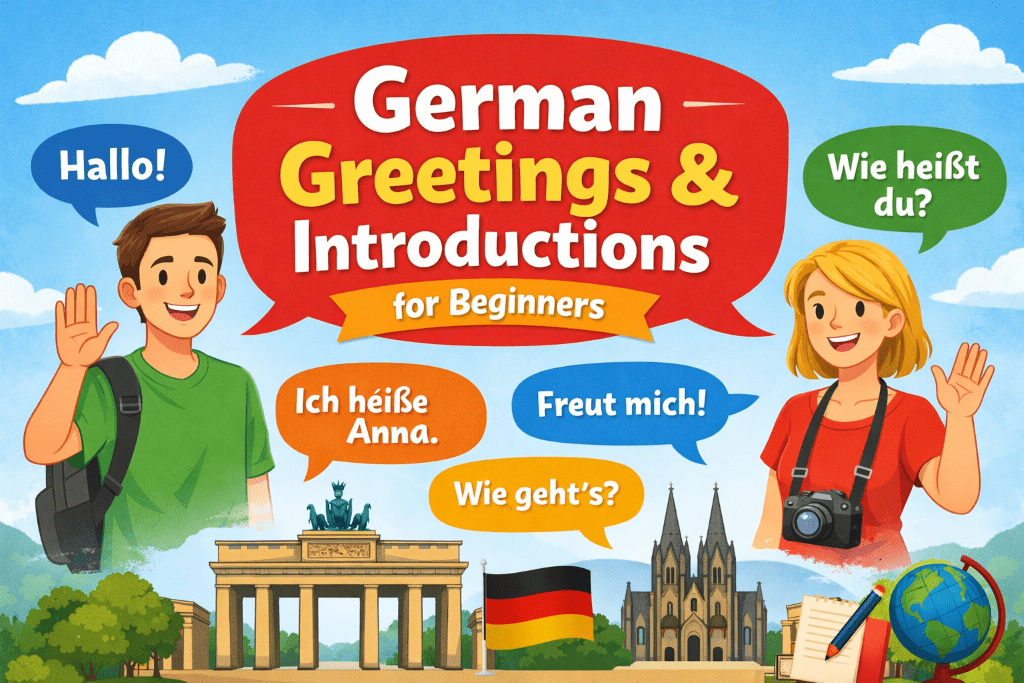
German Greetings and Introductions for Beginners
Learning German greetings and introductions is one of the best ways to start speaking the language. These are some of the first beginning German phrases every beginner needs because you will use them in everyday conversation, travel, class, work, and social situations.
When you know how to say hello, introduce yourself, ask someone’s name, and respond politely, German starts to feel much more usable. You do not need advanced grammar to do that. You just need the right German greetings for beginners and a few simple introduction phrases you can use right away.
In this guide, you will learn the most useful German greetings and introductions for beginners, including formal and informal options, English translations, and example sentences.
Common German Greetings for Beginners
These are the most important German greetings every beginner should know.
Hallo = Hello
Hallo is one of the most common and easy German greetings. It works in many everyday situations and is a good general choice for beginners.
Example:
Hallo! Wie geht’s?
Hello! How are you?
Guten Morgen = Good morning
Use Guten Morgen in the morning.
Example:
Guten Morgen, Anna.
Good morning, Anna.
Guten Tag = Good day / Hello
Guten Tag is a polite and formal greeting you can use during the day.
Example:
Guten Tag, Herr Müller.
Good day, Mr. Müller.
Guten Abend = Good evening
Use Guten Abend in the evening.
Example:
Guten Abend, Frau Schneider.
Good evening, Ms. Schneider.
Tschüss = Bye
Tschüss is one of the most common informal ways to say goodbye in German.
Example:
Tschüss! Bis morgen.
Bye! See you tomorrow.
Auf Wiedersehen = Goodbye
Auf Wiedersehen is more formal than Tschüss.
Example:
Auf Wiedersehen und schönen Tag noch.
Goodbye and have a nice day.
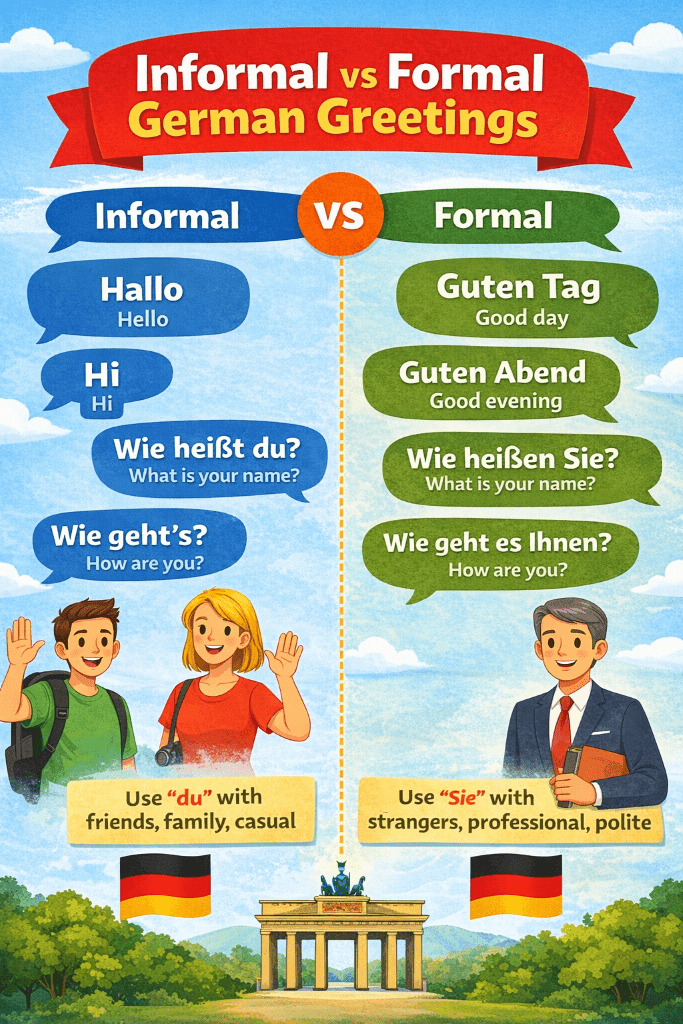
Informal vs Formal German Greetings
One important part of learning German greetings and introductions is understanding the difference between informal and formal language.
German uses:
- du for informal situations
- Sie for formal situations
You usually use du with:
- friends
- family
- children
- people your own age in casual settings
You usually use Sie with:
- strangers
- teachers
- coworkers in formal settings
- older people you do not know
- customer service situations
Informal greeting examples
- Hallo
- Hi
- Tschüss
- Wie heißt du? = What is your name?
- Wie geht’s? = How are you?
Formal greeting examples
- Guten Tag
- Guten Abend
- Auf Wiedersehen
- Wie heißen Sie? = What is your name?
- Wie geht es Ihnen? = How are you?
This is one of the first things beginners should learn because it affects how natural and polite your German sounds.
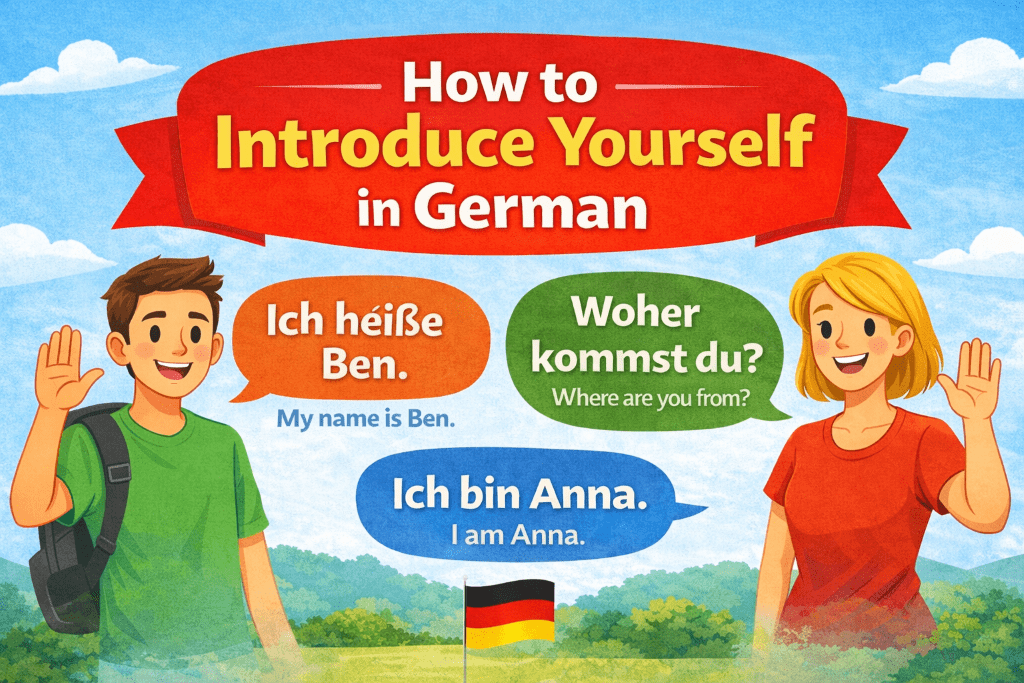
How to Introduce Yourself in German
Once you know how to greet someone, the next step is introducing yourself.
Here are the most useful German introduction phrases for beginners.
Ich heiße … = My name is …
This is one of the most common ways to introduce yourself.
Example:
Ich heiße Sarah.
My name is Sarah.
Ich bin … = I am …
You can also introduce yourself with Ich bin plus your name.
Example:
Ich bin David.
I am David.
Ich komme aus … = I come from …
Use this to say where you are from.
Example:
Ich komme aus den USA.
I come from the USA.
Ich wohne in … = I live in …
Use this to say where you live.
Example:
Ich wohne in Chicago.
I live in Chicago.
Ich lerne Deutsch. = I am learning German.
This is a very useful phrase for beginners.
Example:
Hallo, ich heiße Maria und ich lerne Deutsch.
Hello, my name is Maria and I am learning German.
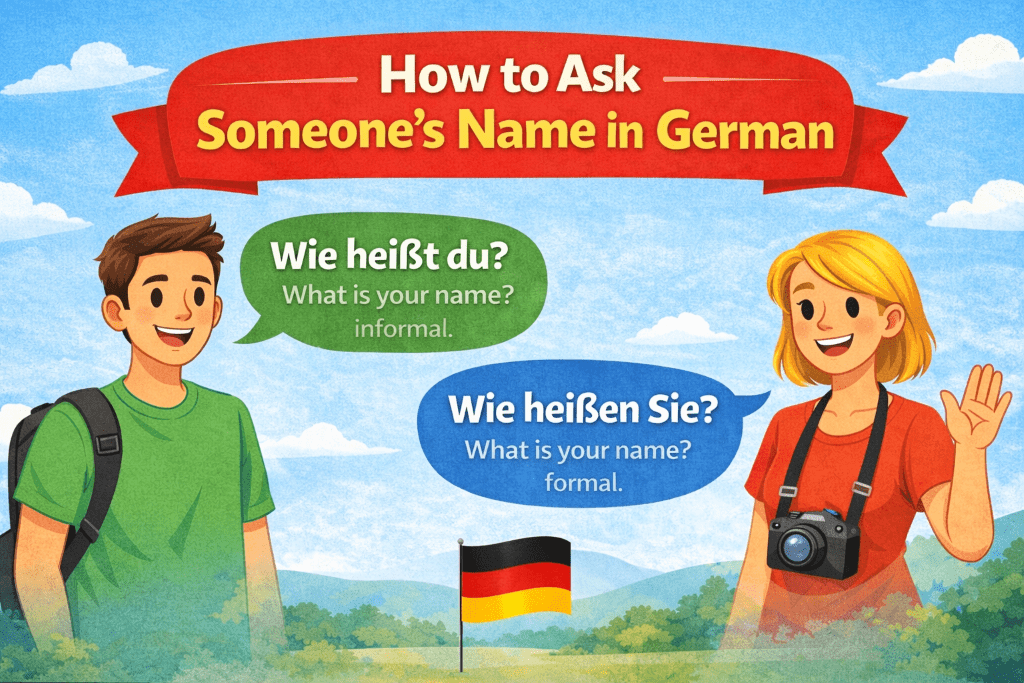
How to Ask Someone’s Name in German
These are basic German introduction phrases you will hear often.
Wie heißt du? = What is your name?
Use this in informal situations.
Example:
Hallo, wie heißt du?
Hello, what is your name?
Wie heißen Sie? = What is your name?
Use this in formal situations.
Example:
Guten Tag, wie heißen Sie?
Good day, what is your name?
Ich heiße … = My name is …
This is the most common response.
Example:
Ich heiße Lukas.
My name is Lukas.
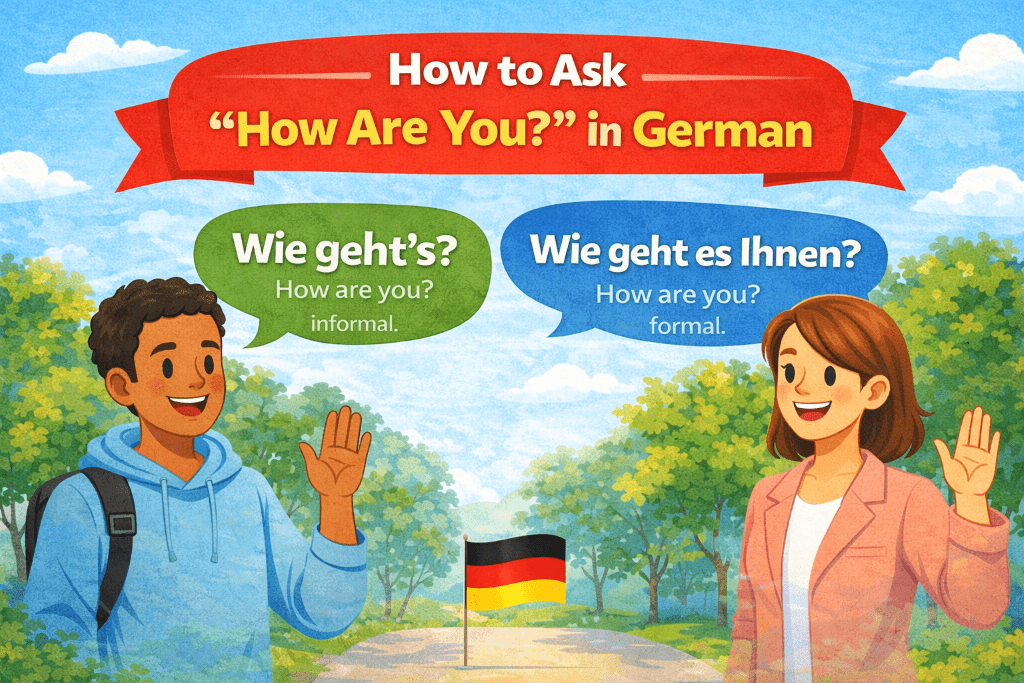
How to Ask “How Are You?” in German
This is one of the most common parts of beginner conversation.
Wie geht’s? = How are you?
Informal.
Wie geht es dir? = How are you?
Also informal, slightly fuller.
Wie geht es Ihnen? = How are you?
Formal.
Common answers
- Gut, danke. = Good, thank you.
- Sehr gut. = Very good.
- Es geht. = It’s okay.
- Nicht so gut. = Not so good.
- Auch gut, danke. = Also good, thank you.
Example:
Wie geht’s?
Gut, danke. Und dir?
How are you?
Good, thank you. And you?
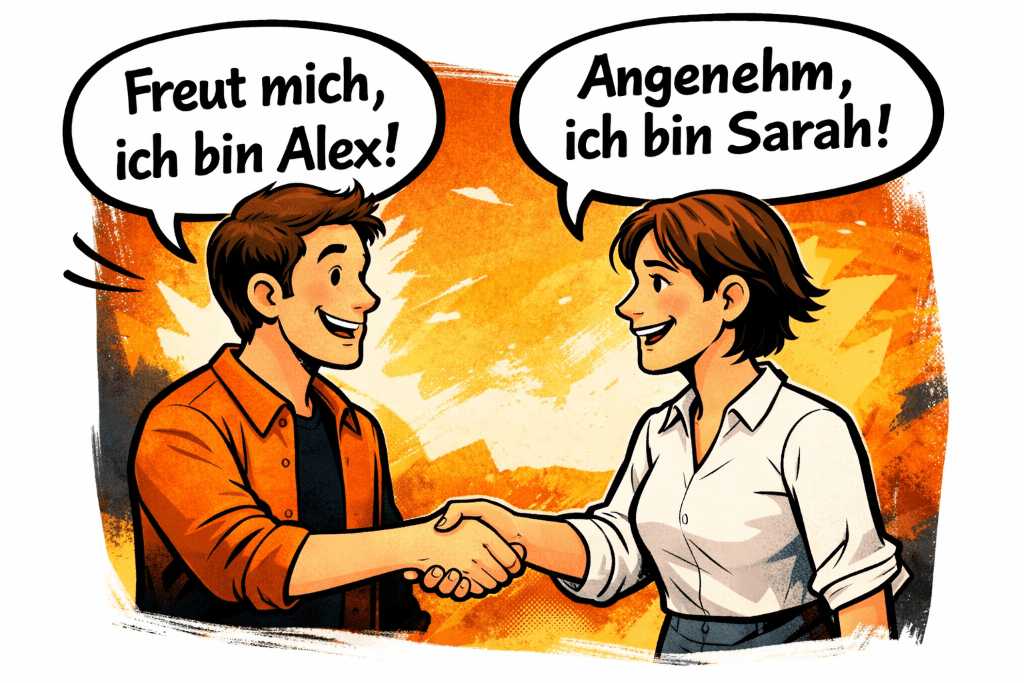
Nice to Meet You in German
When meeting someone for the first time, these phrases are very useful.
Freut mich. = Nice to meet you.
This is a common and simple beginner phrase.
Freut mich, dich kennenzulernen. = Nice to meet you.
Informal.
Freut mich, Sie kennenzulernen. = Nice to meet you.
Formal.
For beginners, Freut mich is often the easiest and most practical version to remember.
Beginner German Greeting Dialogue
Here is a simple example of a beginner conversation using German greetings and introductions.
Anna: Hallo!
Ben: Hallo!
Anna: Wie heißt du?
Ben: Ich heiße Ben. Und du?
Anna: Ich heiße Anna.
Ben: Freut mich.
Anna: Freut mich auch.
Ben: Wie geht’s?
Anna: Gut, danke. Und dir?
Ben: Auch gut, danke.
Translation:
Anna: Hello!
Ben: Hello!
Anna: What is your name?
Ben: My name is Ben. And you?
Anna: My name is Anna.
Ben: Nice to meet you.
Anna: Nice to meet you too.
Ben: How are you?
Anna: Good, thank you. And you?
Ben: Also good, thank you.
This is exactly the kind of simple dialogue that helps beginners feel more comfortable speaking German early on.
Useful German Greetings and Introduction Phrases List
Here is a quick reference list of essential German greetings and introductions for beginners:
- Hallo = Hello
- Hi = Hi
- Guten Morgen = Good morning
- Guten Tag = Good day
- Guten Abend = Good evening
- Tschüss = Bye
- Auf Wiedersehen = Goodbye
- Wie heißt du? = What is your name?
- Wie heißen Sie? = What is your name? formal
- Ich heiße … = My name is …
- Ich bin … = I am …
- Wie geht’s? = How are you?
- Wie geht es dir? = How are you? informal
- Wie geht es Ihnen? = How are you? formal
- Gut, danke. = Good, thank you.
- Und dir? = And you?
- Und Ihnen? = And you? formal
- Freut mich. = Nice to meet you.
- Ich komme aus … = I come from …
- Ich wohne in … = I live in …
- Ich lerne Deutsch. = I am learning German.
Once you know these introductions, it helps to learn some basic German verbs so you can build simple sentences more easily.
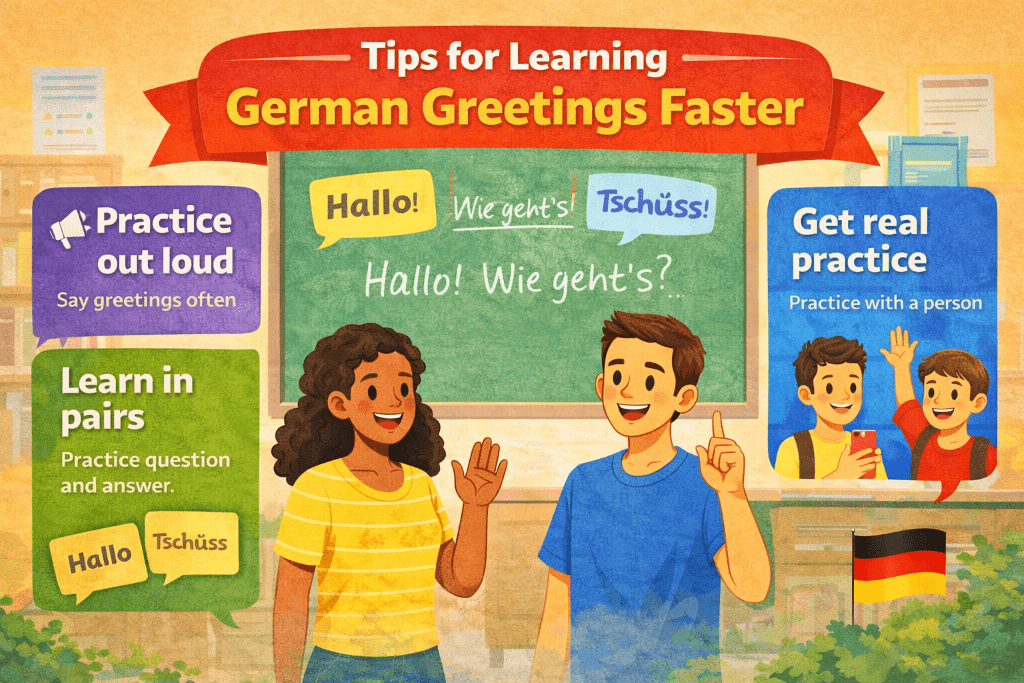
Tips for Learning German Greetings Faster
If you want to remember German greetings for beginners more easily, focus on repetition and real use.
Practice them out loud
Greetings are meant to be spoken, not silently admired from a distance. Say them out loud several times.
If you want to sound more natural from the beginning, spend some time with a German pronunciation guide and practice these phrases out loud.
Learn them in pairs
Practice common question and answer combinations:
- Wie heißt du? / Ich heiße …
- Wie geht’s? / Gut, danke.
- Hallo / Tschüss
Use both formal and informal versions
Even if you mostly use casual German at first, it is smart to learn both.
Practice with short dialogues
Mini conversations help greetings stick much better than isolated phrase lists.
Common Mistakes Beginners Make
Mixing up du and Sie
This is very common. Beginners often use informal and formal phrases interchangeably. Try to notice which situation you are in.
Saying only words, not full phrases
It is helpful to learn chunks like:
- Wie geht’s?
- Ich heiße …
- Freut mich.
That is much more useful than memorizing one word at a time.
Forgetting goodbye phrases
A lot of learners focus only on hello and forget how to end a conversation. Learn both greetings and farewells.
FAQ: German Greetings and Introductions
How do you say hello in German?
The most common ways to say hello in German are Hallo, Hi, and Guten Tag. Hallo is the easiest everyday option for beginners.
How do you introduce yourself in German?
The most common ways are Ich heiße … and Ich bin …. You can also add Ich komme aus … or Ich wohne in … to give more information.
What is the difference between Wie heißt du and Wie heißen Sie?
Wie heißt du? is informal.
Wie heißen Sie? is formal.
How do you say nice to meet you in German?
A simple beginner-friendly phrase is Freut mich.
Is Guten Tag formal?
Yes. Guten Tag is more formal than Hallo and is often used in polite or professional situations.
Final Thoughts on German Greetings and Introductions for Beginners
Learning German greetings and introductions for beginners gives you an easy and practical way to start speaking the language. These phrases are simple, useful, and easy to practice every day.
Once you can say hello, ask someone’s name, introduce yourself, and respond politely, you already have the foundation for real conversation. That is a strong start.
Do not worry about sounding perfect. Focus on using a few basic German phrases well. Then build from there.
It also helps to review German numbers so you can talk about your age, phone number, dates, and other basic personal information.