Polite German Phrases for Beginners
Polite German Phrases for Beginners
Learning German polite phrases is one of the easiest ways to sound more natural from the beginning. Even if your grammar is still basic, polite expressions help you communicate more respectfully in everyday situations. They work in shops, restaurants, conversations, travel, class, and daily life.
This guide covers the most useful German polite phrases for beginners, with English translations and simple examples. These are the kind of common German phrases that make your German sound friendlier, clearer, and more natural right away.
Here are some of the most important German polite phrases to learn first.
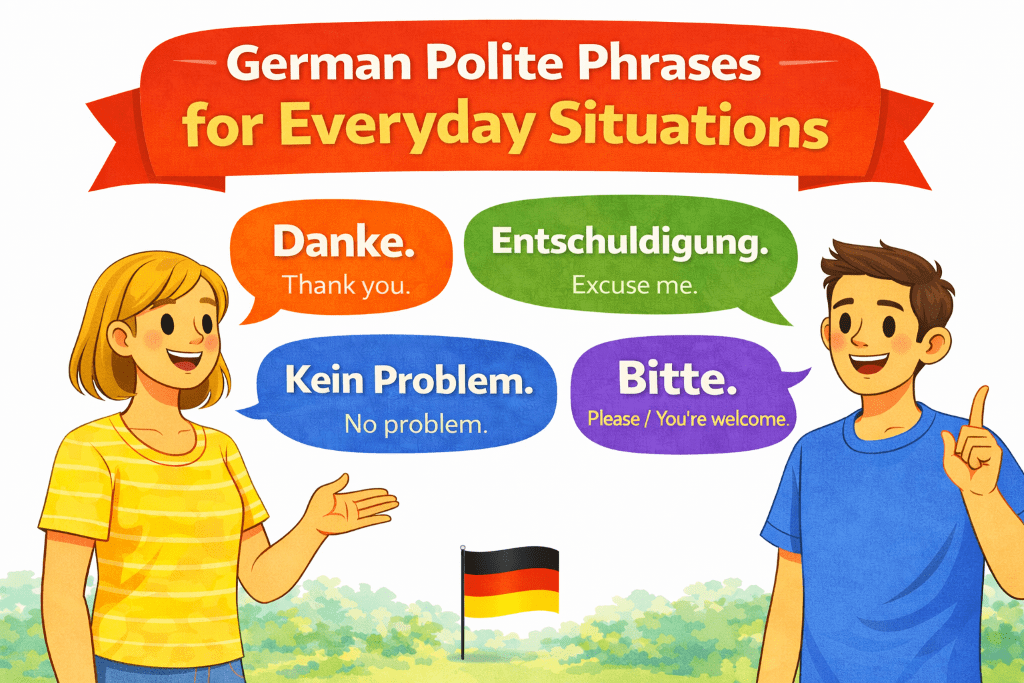
- Bitte = Please / You’re welcome
- Danke = Thank you
- Vielen Dank = Thank you very much
- Gern geschehen = You’re welcome
- Entschuldigung = Excuse me / Sorry
- Es tut mir leid. = I’m sorry.
- Kein Problem. = No problem.
- Ja = Yes
- Nein = No
- Vielleicht = Maybe
They are the kind of beginning German phrases that make your speech sound more polite from the start.
How to Say Please and Thank You in German
Bitte
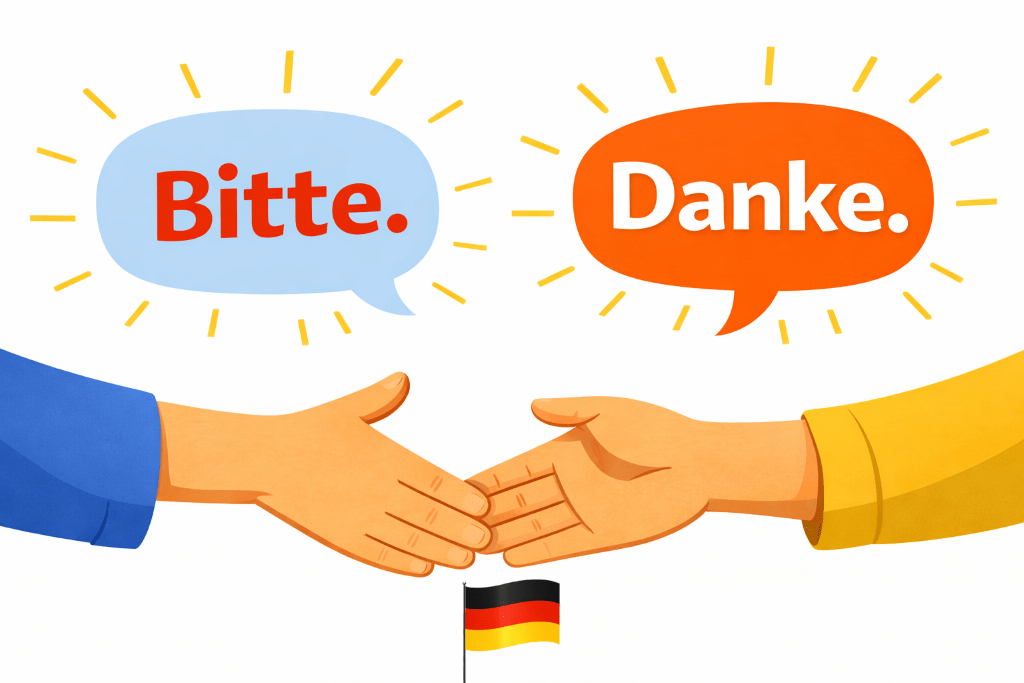
Bitte is one of the most useful words in German. It can mean please, but it can also mean you’re welcome depending on the situation.
Examples:
- Ein Kaffee, bitte. = A coffee, please.
- Kommen Sie bitte herein. = Please come in.
- Danke. Bitte. = Thank you. You’re welcome.
This is one of the first German polite phrases for beginners because you will use it constantly.
Danke
Danke means thank you.
Examples:
- Danke für deine Hilfe. = Thank you for your help.
- Danke schön. = Thank you very much.
Vielen Dank
Vielen Dank is a stronger and more formal-sounding way to say thank you very much.
Example:
- Vielen Dank für alles. = Thank you very much for everything.
Tip: To make these phrases sound more natural, practice them out loud with a German pronunciation guide.
How to Say “You’re Welcome” in German
Bitte
As mentioned above, bitte can also mean you’re welcome.
Example:
- Danke.
- Bitte.
Gern geschehen
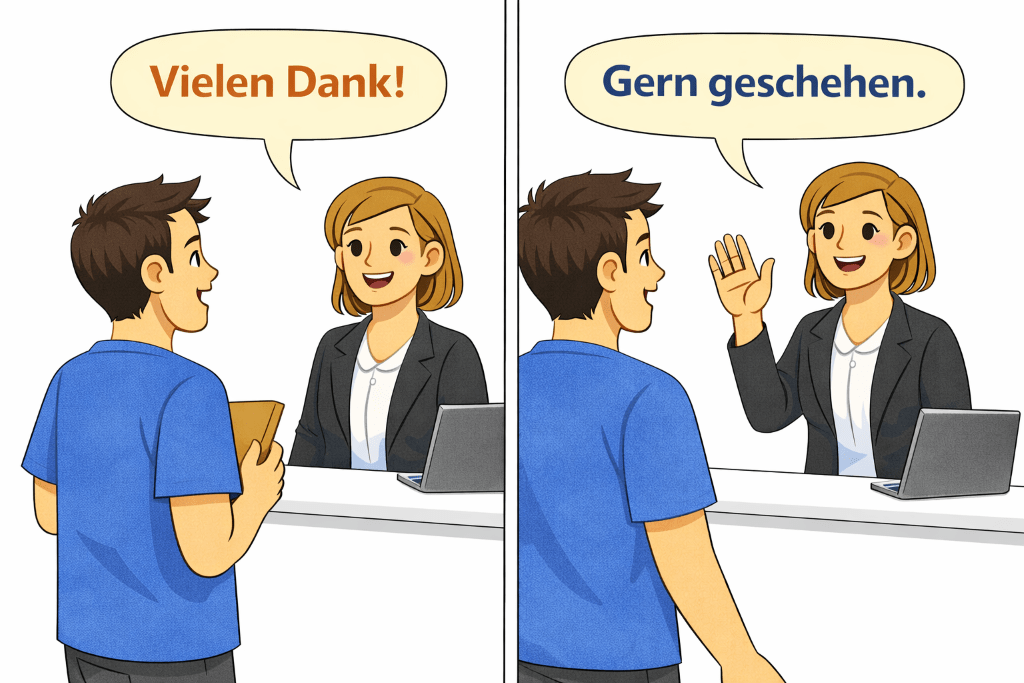
Gern geschehen is another common way to say you’re welcome.
Example:
- Vielen Dank.
- Gern geschehen.
This phrase sounds polite and natural, and it is very useful in everyday conversation.
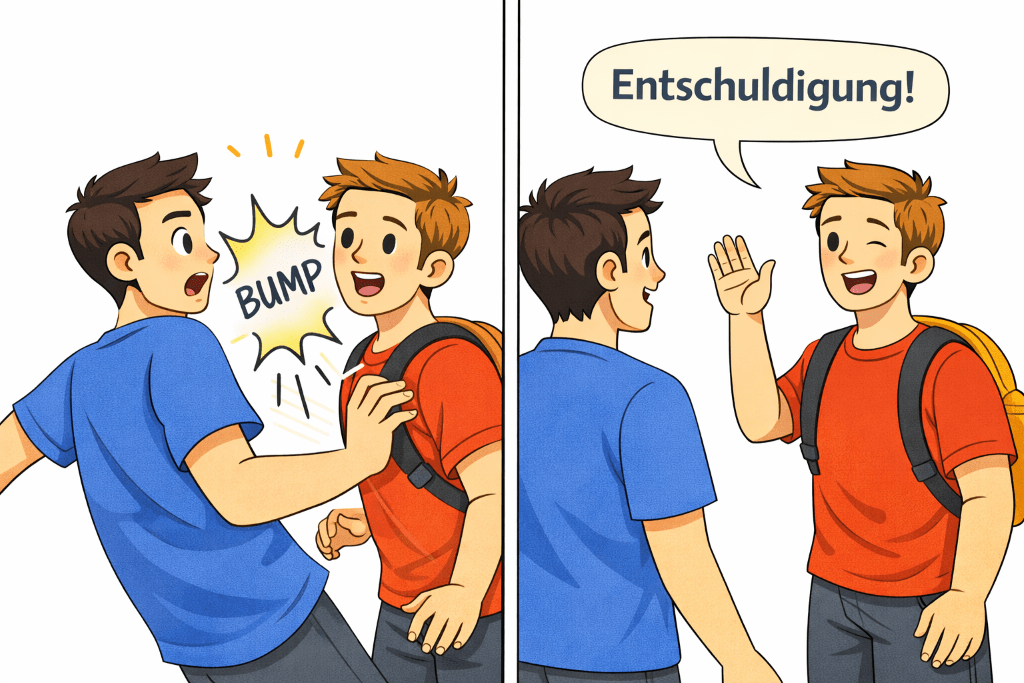
How to Say Sorry and Excuse Me in German
Entschuldigung
Entschuldigung is one of the most practical German polite phrases because it can mean both excuse me and sorry.
You can use it when:
- you want to get someone’s attention
- you bump into someone
- you need to ask a question politely
- you want to apologize lightly
Examples:
- Entschuldigung, wo ist der Bahnhof? = Excuse me, where is the train station?
- Entschuldigung! = Sorry!
Es tut mir leid.
Es tut mir leid means I’m sorry. It sounds more serious and personal than Entschuldigung.
Example:
- Es tut mir leid, ich bin zu spät. = I’m sorry, I am late.
For beginners, it helps to think of it like this:
- Entschuldigung = excuse me / sorry in everyday situations
- Es tut mir leid = I’m sorry in a more direct way
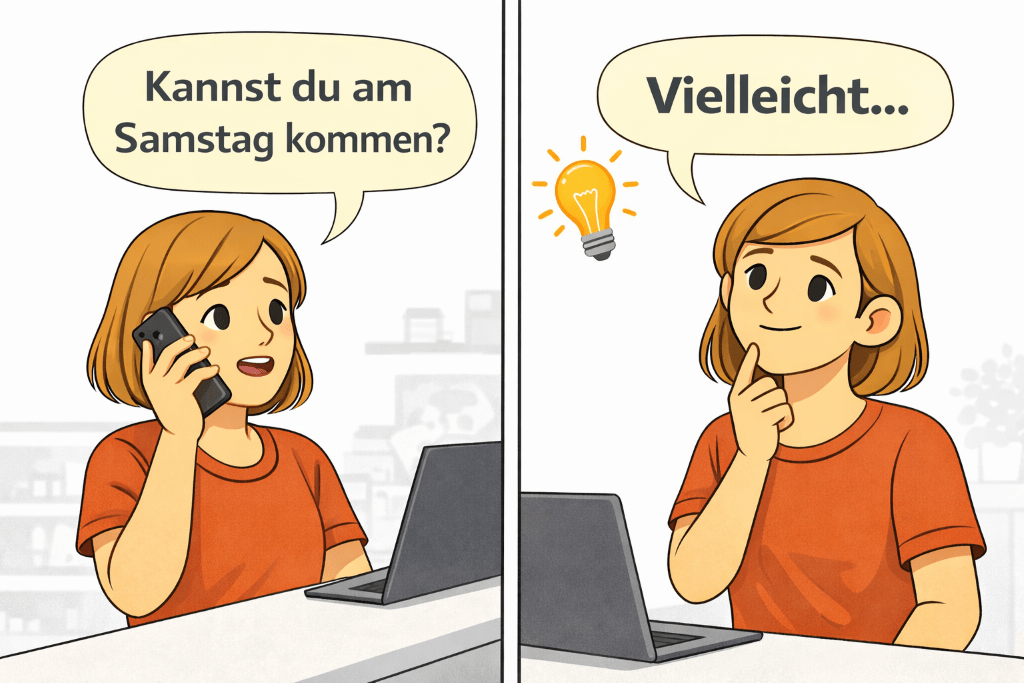
Simple Everyday Response Phrases
These short responses are useful in conversation and help you sound more natural.
Kein Problem
Kein Problem means no problem.
Example:
- Danke für deine Hilfe.
- Kein Problem.
Ja
Ja means yes.
Nein
Nein means no.
Vielleicht
Vielleicht means maybe.
These words are small, but they are part of the most common German phrases for everyday situations.
Example Sentences with German Polite Phrases
Here are simple sentences using these phrases in context.
- Ein Wasser, bitte. = A water, please.
- Danke für die Information. = Thank you for the information.
- Vielen Dank für Ihre Hilfe. = Thank you very much for your help.
- Entschuldigung, ich verstehe nicht. = Excuse me, I do not understand.
- Es tut mir leid, ich habe keine Zeit. = I’m sorry, I do not have time.
- Kein Problem. = No problem.
- Ja, gern. = Yes, gladly.
- Nein, danke. = No, thank you.
- Vielleicht später. = Maybe later.
These are the kind of beginner German phrases that are useful right away.
Once you know these expressions, add some basic German verbs so you can build longer polite sentences of your own.
Mini Dialogue with German Polite Phrases
Here is a simple beginner dialogue:
Anna: Entschuldigung, ist das frei?
Ben: Ja, bitte.
Anna: Danke.
Ben: Kein Problem.
Anna: Vielen Dank.
Ben: Gern geschehen.
Translation:
Anna: Excuse me, is this seat free?
Ben: Yes, please.
Anna: Thank you.
Ben: No problem.
Anna: Thank you very much.
Ben: You’re welcome.
This kind of short dialogue helps beginners see how German polite phrases work in real conversation.
When to Use Polite German Phrases
These phrases work in many everyday situations, including:
- talking to strangers
- shopping
- asking for help
- ordering food
- speaking to teachers or coworkers
- traveling
- responding politely in conversation
Polite language is especially important when your German is still basic. Even a short phrase like bitte or danke can make a big difference in how natural and respectful you sound.
How to Learn German Polite Phrases Faster
Practice them out loud
Polite phrases are meant to be spoken, not silently collected like decorative vocabulary. Say them out loud and repeat them often.
Learn them in pairs
These phrases are easier to remember when you study them as question-and-response pairs:
- Danke / Bitte
- Vielen Dank / Gern geschehen
- Entschuldigung / Kein Problem
Use them in simple situations
The more practical the phrase feels, the easier it is to remember. Use them in mini dialogues and everyday examples.
Keep them short at first
You do not need long polite sentences in the beginning. Short, clear expressions are enough.
Common Mistakes Beginners Make
Using only danke
Danke is important, but it should not be the only polite phrase you know. Learn bitte, Entschuldigung, and Kein Problem too.
Mixing up bitte
Bitte can mean please or you’re welcome, so beginners sometimes find it confusing. The meaning depends on the situation.
Forgetting polite fillers
Words like ja, nein, and vielleicht may seem basic, but they are part of real, natural conversation.
FAQ: German Polite Phrases for Everyday Situations
What is the most useful polite phrase in German?
One of the most useful polite phrases in German is bitte because it can mean both please and you’re welcome.
How do you say thank you in German?
The most common way to say thank you in German is danke. You can also say vielen Dank for thank you very much.
How do you say excuse me in German?
A common way to say excuse me in German is Entschuldigung.
What is the difference between Entschuldigung and Es tut mir leid?
Entschuldigung is often used for excuse me or light apologies. Es tut mir leid means I’m sorry and usually sounds more direct or serious.
Is German very formal with polite phrases?
German can be formal depending on the situation, but basic polite phrases like bitte, danke, and Entschuldigung work well in both everyday and more formal settings.
Final Thoughts on German Polite Phrases
Learning German phrases for everyday situations is one of the simplest ways to improve your German quickly. These phrases are short, practical, and useful in almost every setting.
Start with bitte, danke, Entschuldigung, and kein Problem. Practice them often. Use them in short dialogues. Then build from there.
You do not need advanced grammar to sound more polite in German. You just need the right everyday expressions.
Next, work on expanding your A1/A2 German vocabulary.