German Last Names and How to Decode Their Meanings
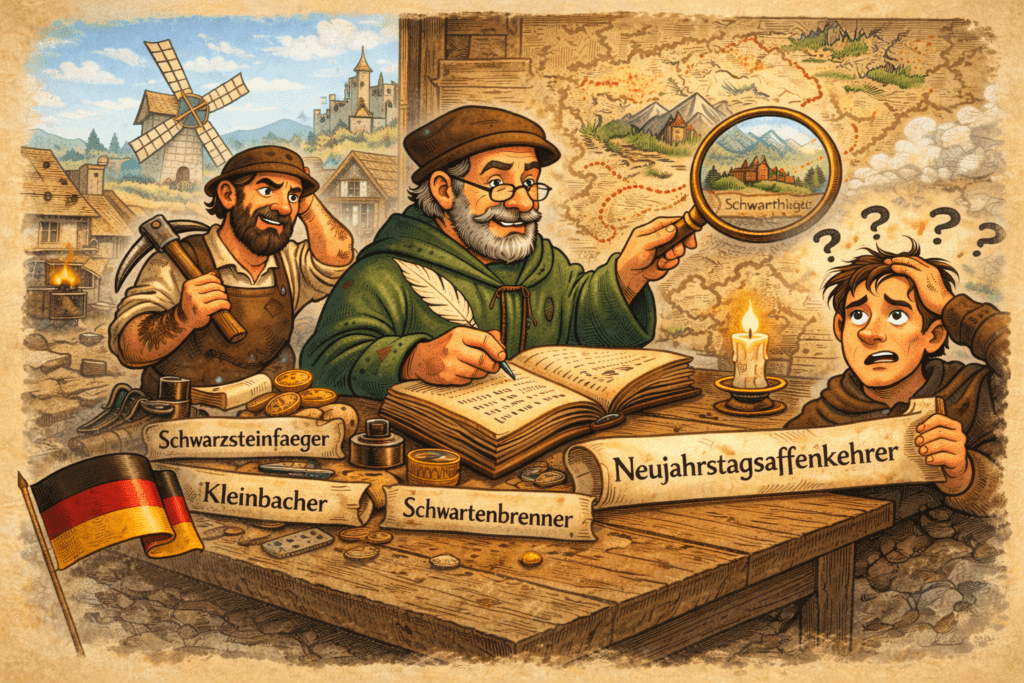
“Have you ever looked at German last names like Schwarzenegger, Schlagenhauf, or Ziegelbauer and thought… how do you even pronounce that?”
German surnames often look like linguistic puzzles, full of long compound words and strange consonant clusters.
But once you understand how they work, something amazing happens.
German surnames aren’t random at all.
They tell you:
- what your ancestors did for a living
- where they lived
- what they looked like
- or even their personality
And sometimes a rare surname can reveal more specific history than common ones like Müller or Schmidt ever could.
Many German surnames are actually built from everyday words that still exist in the language today. If you want to recognize these patterns more easily, it helps to build a foundation of German vocabulary.
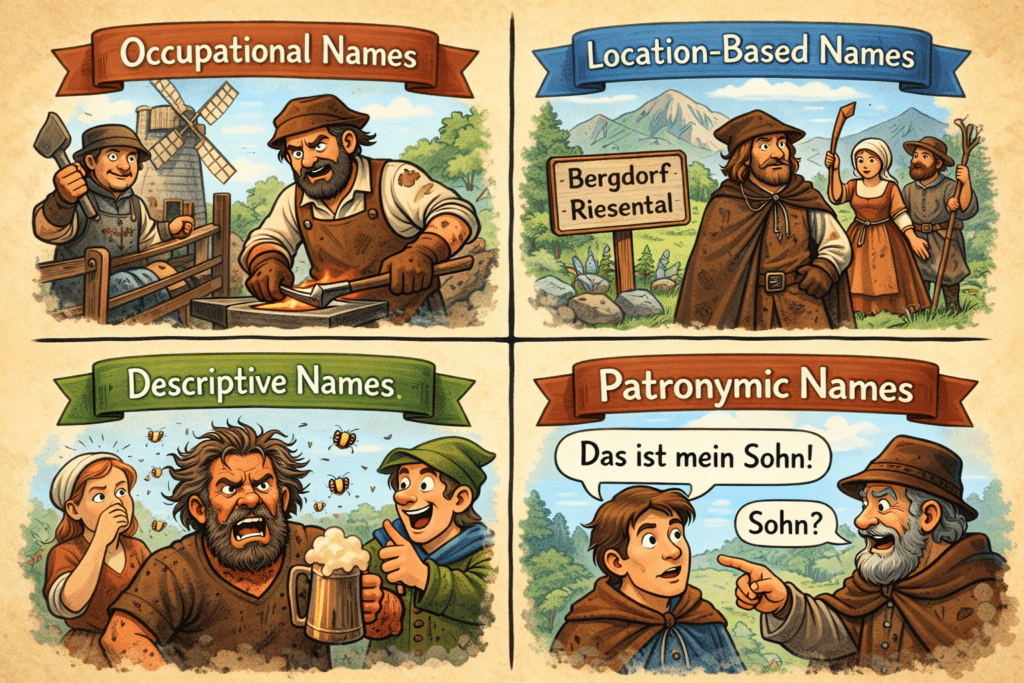
The 4 Major Types of German Last Names
Before we decode rare names, we need to understand the origins of German surnames.
Most German family names fall into four categories.
- Occupational Names
- Location-Based Names
- Descriptive Names
- Patronymic Names
1. Occupational Names
These are the most common.
Examples:
- Müller – miller
- Schmidt – blacksmith
- Fischer – fisherman
- Bauer – farmer
In medieval villages, people were often identified by their profession.
So “Hans the Miller” eventually became Hans Müller.
2. Location-Based Names
Some surnames tell you where someone lived.
Examples:
- Bach – someone who lived near a stream
- Bergmann – someone living near a mountain
- Stein – someone near stone cliffs or quarries
These names acted like early GPS markers.
Tools like a German surname distribution map can reveal which regions of Germany historically had the highest concentration of a particular family name.
3. Descriptive Names
Some surnames were basically nicknames that stuck.
Examples:
- Klein – small
- Lang – tall
- Schwarz – dark-haired
Medieval communities were small, so descriptive names helped distinguish people.
4. Patronymic Names
These names were based on a father’s name.
Examples:
- Peters – son of Peter
- Hansen – son of Hans
This naming pattern was especially common in northern Germany.
If you want to research your own name, the Digital Dictionary of Surnames in Germany provides detailed etymology and regional distribution data.
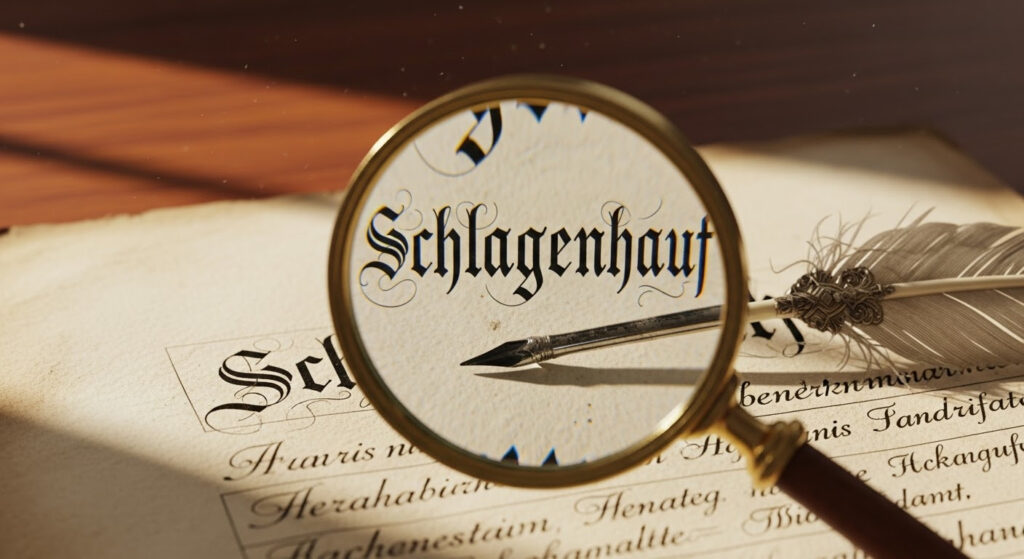
The Schlagenhauff Mystery: When German Last Names Become Sentences
Now we arrive at the truly fascinating category: rare compound surnames.
One example is Schlagenhauf.
German compounds combine multiple words into one name.
Breaking it down:
- schlagen – to strike or hit
- Hauf / Haufen – heap or pile
Some rare German surnames even include verbs that describe actions or tasks. Learning the most common German verbs can help you break down these compound names more easily.
So a name like Schlagenhauf likely described someone whose job involved striking piles of material, possibly:
- a charcoal burner
- a miner
- a blacksmith assistant
- someone processing agricultural crops
In medieval Germany, some surnames became mini descriptions of a person’s task.
Instead of simply “smith,” you might get something much more specific.
Almost like a tiny sentence frozen in time.
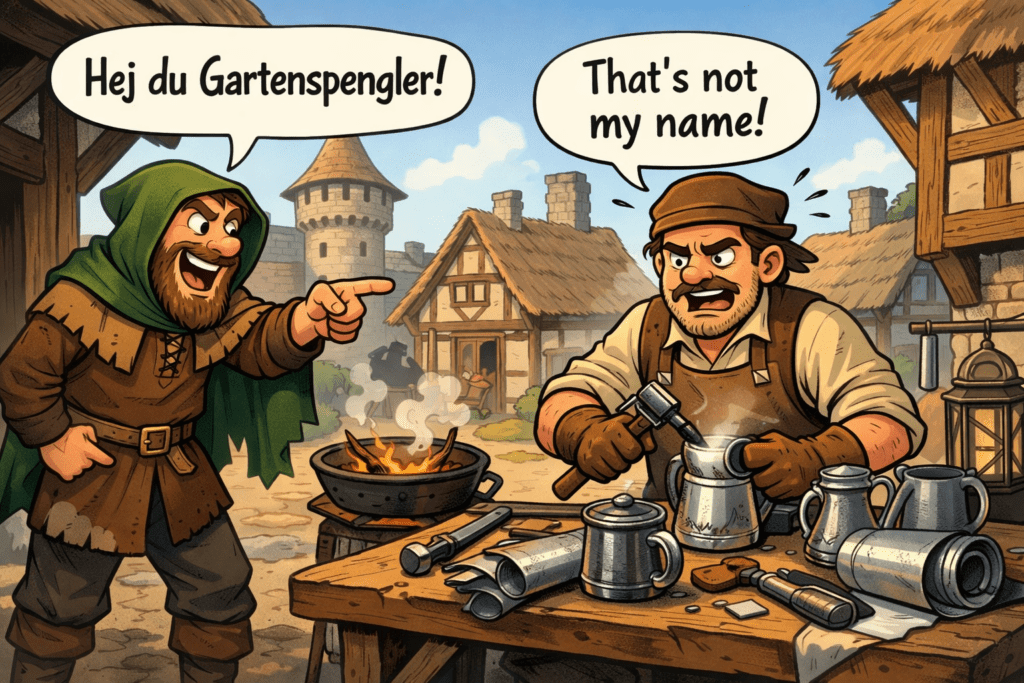
Named After Your Medieval Side Hustle: Jobs That Became Rare Surnames
Many rare German surnames come from professions that no longer exist.
Examples of German surnames tied to historic occupations include:
- Gerber — leather tanner
- Köhler — charcoal maker
- Meyer (Meier) — estate steward
- Pfeiffer — pipe musician
- Schäfer — shepherd
- Schreiber — document scribe
- Schreiner — cabinetmaker
- Schwertfeger — sword polisher
- Spengler — tinsmith
- Wagner — wagon builder
These industries were often extremely localized. Which means a rare surname might trace back to one valley or even one village.
By the 1400s and 1500s, tax collectors, church officials, and city registrars began recording names permanently.
A local nickname suddenly became a hereditary surname passed down for centuries.
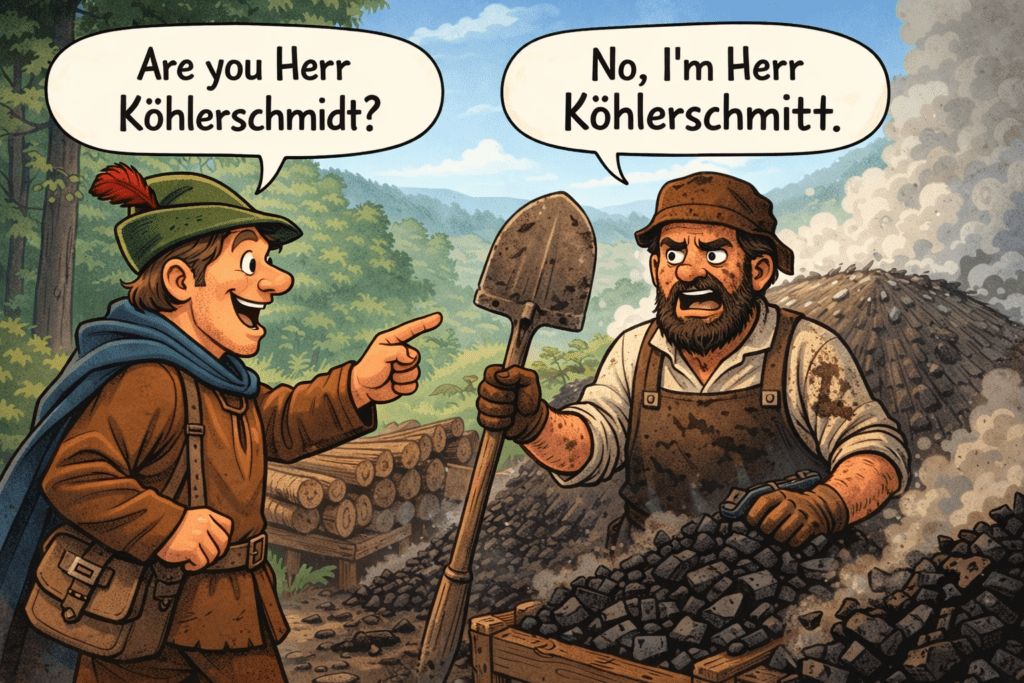
Regional Dialects and Why Names Change
German surnames also vary depending on regional dialects.
Historically, Germany had many linguistic regions:
- High German (southern regions)
- Low German (northern regions)
- Alemannic dialects (Switzerland & southwest Germany)
- Bavarian dialects
This means the same name could appear in different forms.
For example:
- Schmidt
- Schmitt
- Schmid
- Schmied
All of these essentially mean blacksmith, but reflect local pronunciation. This is why genealogy research often requires looking at multiple spelling variations.
You might be surprised how many German words are recognizable to English speakers. In fact, many German and English words are nearly identical, which makes understanding surname meanings easier.
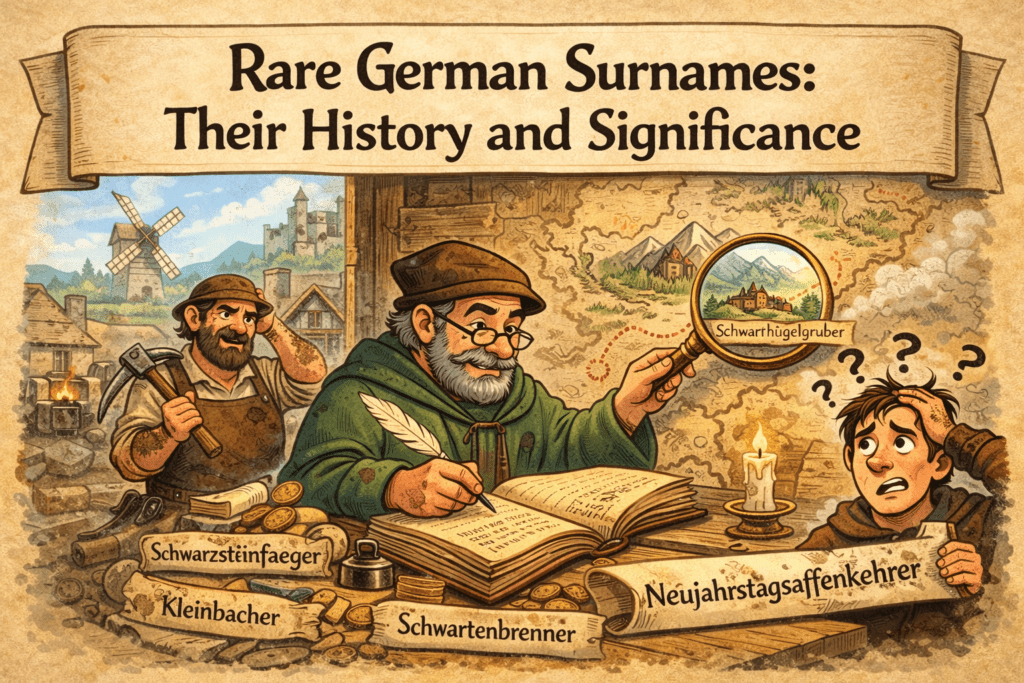
Mapping German Last Names with Modern Genealogy
Today, genealogy tools and surname databases make it easier than ever to trace surname origins.
Researchers can analyze:
- historical census records
- church registries
- immigration documents
- surname distribution maps
These tools allow families to track how names spread from places like:
- the Rhineland
- Bavaria
- Saxony
- Prussia
to countries like:
- the United States
- Canada
- Brazil
- Argentina
German surnames are now scattered across the world. But their origins often remain surprisingly regional and precise.
Many surnames are built from simple nouns like “mill,” “smith,” or “mountain.” Learning the most common German words makes it much easier to recognize these meanings.
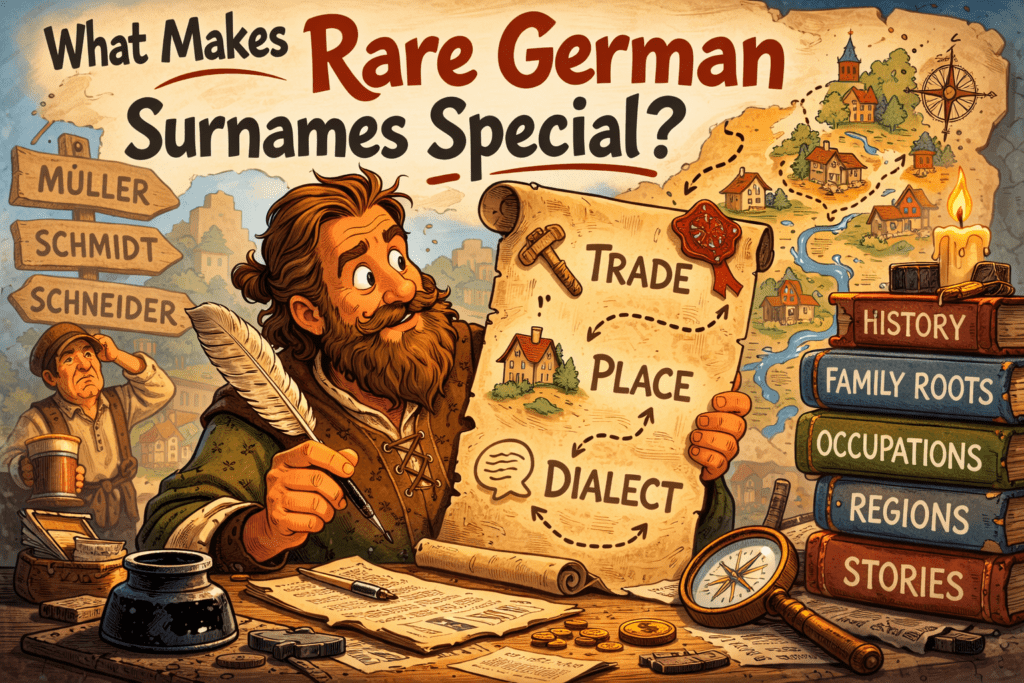
What Makes Rare German Last Names Special?
Unusual German last names can sometimes feel awkward to carry, especially when they are long, full of consonants, or difficult for others to pronounce. But in genealogical terms, these rare surnames are often far more informative than the most common German family names.
Widely shared surnames such as Müller, Schmidt, or Schneider developed from occupations that existed in nearly every town. Because so many people worked in these trades, the names spread widely and offer only limited clues about a specific family’s origins.
Rare German surnames, however, tend to be much more precise. Many developed from highly specific occupations, geographic landmarks, or distinctive local nicknames that existed only in certain regions or small communities. As a result, an uncommon surname can sometimes reveal details about:
- the specialized craft an ancestor practiced
- the village or landscape feature associated with the family
- the regional dialect that influenced how the name was recorded
This is particularly true for compound surnames, which combine multiple German words into a single descriptive label. Names of this type often preserve a snapshot of medieval life by describing a person’s work, environment, or role within a community.
For genealogists and family historians, rare surnames function almost like linguistic artifacts. They preserve fragments of social history that might otherwise be lost, offering clues about the economic activities, local industries, and regional cultures that shaped German-speaking Europe centuries ago.
In that sense, an unusual German last name isn’t just a quirky combination of letters; it can be a small but meaningful record of the past, carried forward through generations.
Final Thoughts on German Surnames
German surnames may look intimidating at first. But once you understand how they work, they become something much more interesting.
They’re not random words. From common names like Müller and Schmidt to rare ones like Schlagenhauf, every surname carries a fragment of the past.
And sometimes the strangest names are the ones that tell the most fascinating stories.
If you’re curious about the language behind these surnames, starting with a few basic German phrases is a great way to get familiar with pronunciation and structure.